
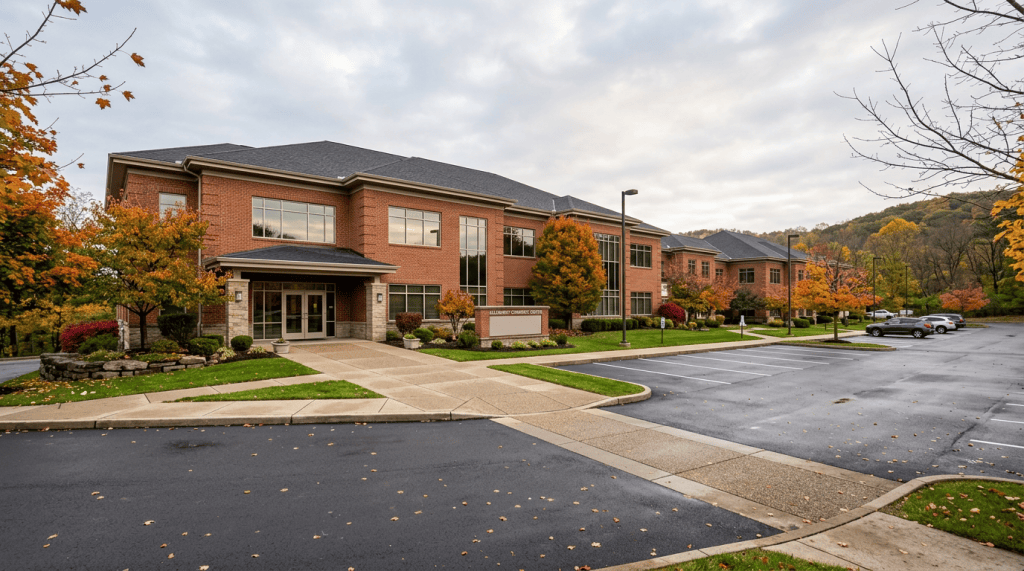
Commercial property maintenance involves more than responding to visible problems. Building owners and property managers must plan for recurring upkeep, manage operating expenses, coordinate contractors, and keep properties presentable for tenants, customers, employees, and visitors.
Exterior cleaning is one area that can become difficult to budget when services are scheduled only after surfaces become noticeably dirty.
Sidewalks, building exteriors, windows, gutters, roofs, parking areas, and other outdoor surfaces all have different maintenance requirements. Without a plan, cleaning expenses can become unpredictable, and important work may be postponed until it becomes more difficult or expensive to address.
The best way to budget for commercial exterior cleaning is to identify the surfaces that need attention, prioritize services by condition and use, estimate the frequency of cleaning, and organize the work into an annual maintenance schedule.
For Pittsburgh-area property managers, this approach can help make exterior cleaning a planned operating expense instead of an occasional last-minute project.
This guide explains how to build a commercial exterior cleaning budget, which services to consider, what affects pricing, and how to evaluate recurring maintenance options.
Why Commercial Properties Need an Exterior Cleaning Budget
Commercial properties experience constant exposure to weather, traffic, vegetation, and everyday activity. Over time, these conditions contribute to dirt, organic growth, staining, and debris on exterior surfaces.
In Southwestern Pennsylvania, seasonal rain, humidity, pollen, falling leaves, winter residue, and freeze-thaw conditions can all affect a property’s exterior maintenance needs.
Without a budget, property managers may face several challenges:
- Cleaning projects get postponed because funds were not allocated.
- Different buildings receive inconsistent maintenance.
- High-traffic areas receive attention only after complaints arise.
- Multiple service providers create additional scheduling work.
- Large cleaning projects become difficult to fit into a single budget period.
- Property owners have limited visibility into upcoming maintenance expenses.
An annual exterior cleaning budget provides a framework for identifying these needs before they become urgent.
It does not mean every surface needs to be cleaned every year. Instead, it helps establish a realistic schedule based on the property’s condition, use, materials, and exposure.
What Services Should Be Included in a Commercial Exterior Cleaning Budget?
The services included in an annual budget will depend on the property type, building materials, traffic, and maintenance priorities.
Here are the primary categories to evaluate.
1. Commercial Building Washing
Building exteriors may collect dirt, algae, mildew, pollen, traffic film, and other environmental buildup.
The appropriate cleaning method depends on the building material and its condition. Some surfaces may be appropriate for controlled pressure washing, while others require soft washing or another specialized approach.
Budget considerations include:
- Total exterior surface area.
- Building height and access.
- Surface material and condition.
- Type and amount of contamination.
- Landscaping and surrounding property protection.
- Scheduling requirements.
For properties with multiple buildings, consider evaluating each building separately rather than applying one cleaning schedule to the entire portfolio.
2. Sidewalk and Concrete Cleaning
Sidewalks, entryways, patios, loading areas, and other concrete surfaces often receive heavy use.
These areas may accumulate dirt, algae, gum, grease, food residue, and other contaminants.
Cleaning priorities should reflect how the area is used.
For example:
- Main entrances may need more frequent attention.
- Restaurant sidewalks and patios may require additional cleaning.
- Shaded walkways may develop organic buildup.
- Loading areas may need cleaning based on operational activity.
- Parking areas may need periodic cleaning based on traffic and staining.
When budgeting, separate high-traffic areas from larger, lower-priority concrete surfaces.
This makes it easier to allocate funds where cleaning is most important.
3. Parking Areas and Garages
Parking lots, parking garages, and other vehicle areas can collect dirt, oil-related staining, tire marks, litter, and other debris.
The scope of cleaning may vary significantly depending on the property.
Consider:
- Total area.
- Surface type.
- Vehicle traffic.
- Staining and contamination.
- Drainage conditions.
- Vehicle and pedestrian access.
- Whether cleaning must occur during restricted operating hours.
Parking areas should be evaluated separately from sidewalks because the equipment, preparation, and cleaning requirements may differ.
4. Commercial Roof Cleaning
Some commercial roofs develop visible organic growth or environmental staining. The appropriate maintenance approach depends on the roofing material, roof condition, manufacturer guidance, and access requirements.
A roof should not automatically be included in a routine pressure-washing schedule.
Instead, budget for appropriate inspections and evaluate whether professional roof cleaning is warranted.
Include these considerations:
- Roofing material and condition.
- Roof accessibility.
- Existing staining or organic growth.
- Drainage and surrounding property protection.
- Manufacturer recommendations.
- Any special safety or access requirements.
Cleaning is not a substitute for roof repairs or replacement. A contractor should identify visible concerns that fall outside the cleaning scope.
5. Gutter and Drainage Cleaning
Clogged gutters and downspouts can interfere with proper drainage and contribute to water-related problems around a building.
Commercial properties with mature trees or substantial roof areas may need particular attention.
When preparing a budget, consider:
- Number and length of gutters.
- Building height.
- Access requirements.
- Tree coverage and debris accumulation.
- Number of buildings.
- Whether downspouts and related drainage components are included.
Gutter cleaning is often best scheduled around seasonal debris patterns and the property’s actual conditions.
6. Commercial Window Cleaning
Clean windows contribute to a professional appearance, particularly for storefronts, offices, restaurants, and customer-facing businesses.
Window cleaning frequency depends on building use, visibility, surrounding traffic, and appearance standards.
A commercial window cleaning budget should account for:
- Number of windows.
- Interior versus exterior cleaning.
- Building height and access.
- Frequency of service.
- Glass condition and existing staining.
- Scheduling around business operations.
A high-visibility retail storefront may require a different schedule from a warehouse or low-traffic office building.
7. Awning and Storefront Cleaning
Awnings, entrance canopies, and storefront features are often overlooked during exterior maintenance planning.
Fabric, vinyl, and metal awnings may require different cleaning procedures. Their condition, location, and material should be evaluated before selecting a method.
Include these features in the budget when they are important to the property’s appearance or customer experience.
How to Build an Annual Commercial Exterior Cleaning Budget
A useful budget begins with an inventory of the property rather than an arbitrary dollar amount.
The following process can help property managers organize their planning.
Step 1: Create a Property Inventory
List every building and major exterior area included in the maintenance budget.
For each property, identify:
- Building exterior materials.
- Roof type and approximate size.
- Gutters and downspouts.
- Sidewalks and entryways.
- Parking areas.
- Windows and storefront glass.
- Awnings and canopies.
- Loading docks and dumpster areas.
- Common areas and outdoor amenities.
For multi-property portfolios, use the same inventory categories at each location. This makes it easier to compare maintenance requirements.
Step 2: Evaluate Current Conditions
Not every surface needs immediate cleaning.
Evaluate the current condition of each area and identify the work that should be prioritized.
A simple priority system can help:
High priority: Areas with significant buildup, recurring complaints, operational concerns, or immediate appearance needs.
Medium priority: Areas that need cleaning within the current budget year but are not urgent.
Routine priority: Areas that are generally maintained and can follow a planned recurring schedule.
This approach helps direct available funds toward the most important work first.
Step 3: Establish Service Frequencies
The ideal cleaning frequency varies by surface and property.
The following table provides planning examples, not universal requirements.
| Service | Initial budgeting consideration |
|---|---|
| Main entrances and sidewalks | Review quarterly or more often where needed |
| Restaurant patios and service areas | Review frequently based on use |
| Parking areas | Evaluate one or more times annually |
| Building exteriors | Assess annually and clean as appropriate |
| Commercial windows | Monthly, quarterly, or seasonal depending on needs |
| Gutters | Evaluate at least seasonally |
| Roofs | Inspect periodically and clean only when appropriate |
| Awnings and canopies | Inspect seasonally and clean as needed |
| Dumpster and loading areas | Set frequency based on operational activity |
The schedule should be adjusted after evaluating actual conditions.
For example, a shaded walkway surrounded by trees may need more attention than an exposed walkway at another property.
Step 4: Request Detailed Estimates
Once the cleaning inventory and priorities are established, request estimates for the work.
A useful estimate should identify:
- Specific areas to be cleaned.
- Approximate quantities or measurements.
- Cleaning methods appropriate for the surfaces.
- Preparation and protection requirements.
- Scheduling expectations.
- Any access or wastewater considerations.
- Services excluded from the estimate.
- Pricing for additional work.
If the property needs recurring service, request pricing for both individual projects and a proposed maintenance schedule.
This allows you to compare the financial implications of one-time cleaning against planned recurring service.
Step 5: Organize Costs by Quarter
Rather than scheduling every service at once, divide the work across the year when appropriate.
A seasonal schedule can make budgeting and contractor coordination easier.
Spring
- Evaluate winter residue on sidewalks and entrances.
- Schedule appropriate building and concrete cleaning.
- Review gutters and drainage.
- Assess storefronts and common areas.
Summer
- Address high-visibility exterior areas.
- Schedule building washing where appropriate.
- Clean patios, entrances, and other customer-facing surfaces.
- Review awnings and canopies.
Fall
- Evaluate gutters and downspouts.
- Remove seasonal debris where appropriate.
- Review building exteriors before winter.
- Address remaining high-priority cleaning projects.
Winter
- Monitor areas affected by winter conditions.
- Review the upcoming annual maintenance budget.
- Plan spring projects and request estimates in advance.
Actual timing depends on weather, surface conditions, operating requirements, and the cleaning method.
Step 6: Maintain a Contingency Allowance
A commercial exterior cleaning budget should account for changes in property conditions and unexpected maintenance needs.
A new tenant, construction project, unusually heavy contamination, or a change in property use can affect cleaning requirements.
Rather than committing the entire budget to scheduled services, consider retaining an allowance for unplanned work.
The appropriate amount depends on the property portfolio and the organization’s budgeting policies.
What Affects Commercial Exterior Cleaning Costs?
Commercial exterior cleaning prices are not determined by square footage alone.
The cost of a project can depend on several factors:
Property size: Larger areas generally require more labor, time, and equipment.
Surface materials: Concrete, brick, stone, vinyl, metal, fabric, and roofing materials have different cleaning requirements.
Condition and contamination: Heavy buildup, grease, staining, or difficult access can require additional preparation.
Building height and access: Multi-story buildings may require specialized equipment or additional safety planning.
Operating hours: Some businesses require early-morning, evening, or other restricted scheduling.
Site preparation: Moving furniture, protecting landscaping, coordinating vehicle access, and preparing work areas can affect labor requirements.
Water and wastewater considerations: Water availability and runoff management should be evaluated for the specific property and work being performed.
Service frequency: Recurring maintenance may help keep surfaces from becoming heavily soiled, but pricing depends on the actual scope and service arrangement.
For a more detailed discussion of commercial pressure-washing prices, see our guide to commercial pressure washing cost in Pittsburgh.
Is a Recurring Commercial Exterior Cleaning Agreement Worth Considering?
For some properties, a recurring service arrangement can make budgeting and maintenance coordination easier.
Rather than requesting separate estimates every time an area needs attention, the property manager and contractor can agree on a defined scope and schedule.
Potential advantages include:
- More predictable scheduling.
- Easier annual budget planning.
- Consistent maintenance priorities.
- Fewer last-minute service requests.
- Simplified coordination across multiple properties.
- Better records of completed work.
However, a recurring agreement should be specific.
Before entering into one, confirm:
- Which properties and areas are included?
- Which services will be performed?
- How often will each service occur?
- How are additional or unexpected services priced?
- What scheduling flexibility is available?
- Who is responsible for access and site preparation?
- What documentation is provided after service?
- How are weather delays and rescheduling handled?
- What are the agreement’s renewal and cancellation terms?
Do not assume every recurring agreement provides the same services or pricing benefits. Compare the actual scope and terms.
How Pittsburgh Property Managers Can Prioritize Exterior Cleaning
A property in downtown Pittsburgh may have different maintenance needs from a suburban retail center, warehouse, or multifamily community.
Local conditions and property use should influence the budget.
Retail Centers and Shopping Plazas
Prioritize customer-facing areas such as storefronts, sidewalks, windows, entrances, and parking areas.
The appearance of these areas can influence how customers perceive the property.
Restaurants and Hospitality Properties
Focus on entrances, sidewalks, outdoor dining areas, storefronts, and other areas affected by food service and daily customer activity.
Cleaning schedules should accommodate operating hours and site-specific requirements.
Office Buildings
Consider building exteriors, windows, entrances, sidewalks, and gutters.
For professional offices, a coordinated schedule can help maintain a consistent appearance without unnecessary disruption.
Multifamily and Condominium Properties
Budget for common walkways, building exteriors, shared entrances, gutters, and other common areas.
Property managers should distinguish between shared property maintenance and services that may be the responsibility of individual owners or tenants.
Warehouses and Industrial Properties
Evaluate loading areas, concrete surfaces, building exteriors, drainage areas, and other operational spaces.
Cleaning methods and scheduling should account for site operations, equipment, and access restrictions.
Commercial Exterior Cleaning Budgeting in Pittsburgh and Southwestern Pennsylvania
So Clean Solutions works with commercial property owners and managers throughout Pittsburgh and surrounding Southwestern Pennsylvania communities.
Properties in Allegheny County, Beaver County, Washington County, and Westmoreland County may have different cleaning requirements depending on their location, construction, landscaping, traffic, and use.
A commercial cleaning budget should reflect those differences.
Rather than applying the same schedule to every building, So Clean Solutions can help evaluate the exterior surfaces, identify appropriate cleaning services, and develop an estimate based on the property’s needs.
Services may include:
- Commercial building washing.
- Pressure washing for suitable concrete and hard surfaces.
- Soft washing for appropriate building materials.
- Commercial window cleaning.
- Roof and gutter cleaning.
- Commercial awning cleaning.
- Sidewalk, entrance, and common-area cleaning.
For a broader overview of available services, visit the So Clean Solutions exterior cleaning services page.
Frequently Asked Questions About Commercial Exterior Cleaning Budgets
How much should a commercial property budget for exterior cleaning?
There is no universal budget amount. Costs depend on the number and size of buildings, surface materials, condition, access, service frequency, and the services required. The best starting point is a property inventory and detailed contractor estimates.
How often should commercial properties be professionally cleaned?
It depends on the property and surface. High-traffic sidewalks and restaurant areas may need more frequent attention than building exteriors or roofs. Establish schedules based on actual conditions, use, and maintenance priorities.
Is it cheaper to schedule recurring commercial exterior cleaning?
Not necessarily in every situation. Recurring service may help manage buildup and simplify scheduling, but pricing depends on the scope, frequency, access, and agreement terms. Ask for a comparison between individual projects and a recurring service arrangement.
What should be included in a commercial exterior cleaning estimate?
A detailed estimate should identify the properties and surfaces included, cleaning methods, preparation requirements, scheduling, exclusions, and pricing. It should also address relevant access and water-management considerations.
Should roof cleaning be included in an annual commercial maintenance budget?
Roof conditions should be evaluated periodically, but cleaning is not automatically needed every year. The appropriate approach depends on roofing material, condition, manufacturer guidance, and the type of buildup present.
Can multiple commercial properties be included in one maintenance plan?
Yes. A property manager can request a coordinated proposal for multiple locations. Each property should still be evaluated individually because building materials, access, use, and cleaning requirements can differ.
When should Pittsburgh businesses schedule exterior cleaning?
Spring and summer are common periods for many exterior cleaning projects, while fall is an important time to evaluate gutters and seasonal debris. Weather, surface conditions, and business operations should determine the actual schedule.
Build a Smarter Commercial Exterior Cleaning Budget
Commercial exterior cleaning does not need to be an unpredictable expense.
By evaluating property conditions, identifying priority services, establishing appropriate cleaning frequencies, and requesting detailed estimates, property managers can create a more organized approach to exterior maintenance.
Whether you manage one commercial building or a portfolio of properties, a planned cleaning budget can help keep exterior maintenance visible, manageable, and aligned with your operating priorities.
Request a Commercial Exterior Cleaning Estimate from So Clean Solutions
So Clean Solutions provides professional exterior cleaning services for commercial properties throughout Pittsburgh and Southwestern Pennsylvania.
We can help you evaluate your property’s cleaning needs, prioritize services, and prepare an estimate for individual projects or a coordinated maintenance program.
Call 412-513-3751 or visit getsoclean.com to request a free, no-obligation estimate.
Plan your exterior maintenance before the next cleaning project becomes urgent.


Leave a Reply