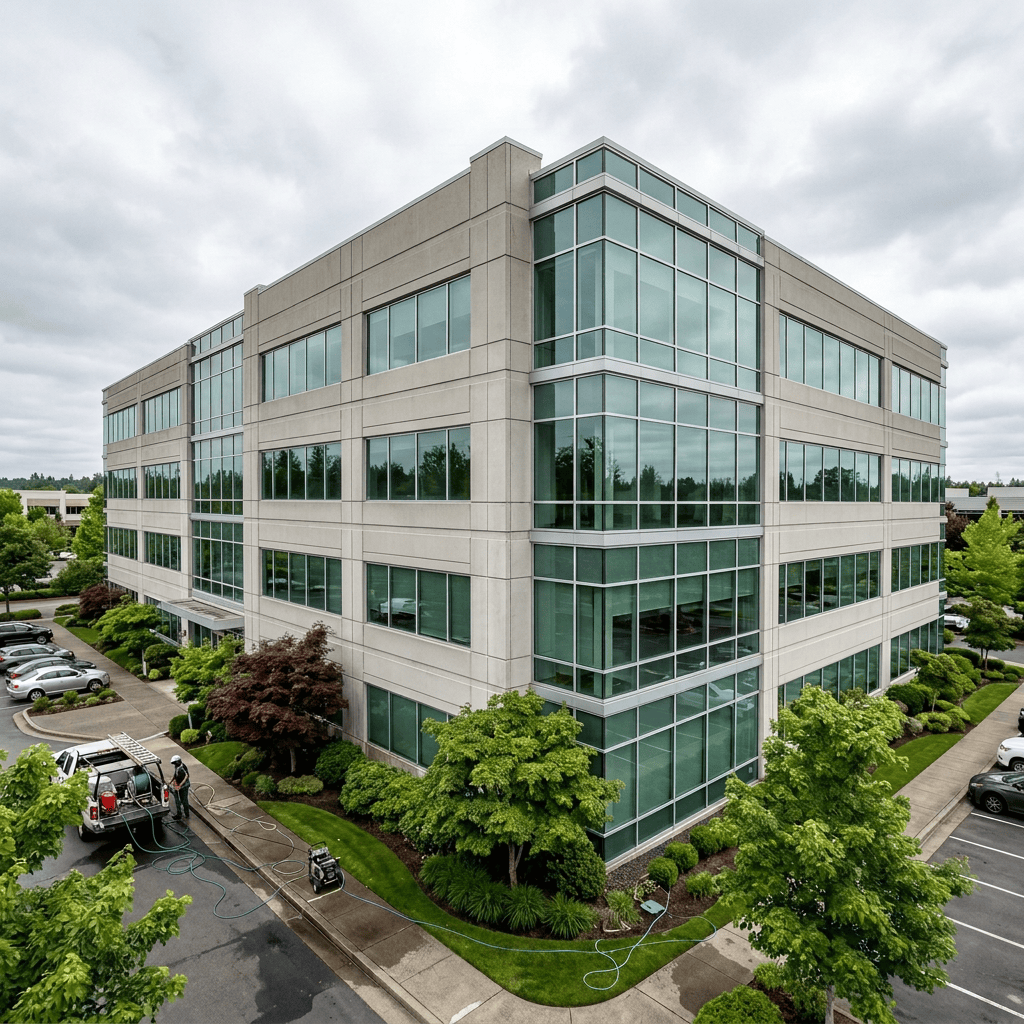
A clean commercial building creates a better first impression for customers, tenants, employees, and visitors. But maintaining a commercial property’s exterior involves more than simply spraying the walls with water.
Different building materials require different cleaning methods. Brick, concrete, vinyl siding, painted surfaces, metal panels, and stucco can react differently to pressure, cleaning solutions, and water exposure.
Choosing the wrong method can damage finishes, disturb mortar, or force water into areas where it doesn’t belong.
So, how do you determine the best way to clean a commercial building?
The answer depends on the surface material, the type of buildup, the condition of the building, and the property’s specific requirements.
This guide explains the differences between commercial pressure washing and soft washing, which surfaces may benefit from each method, and what Pittsburgh-area property owners should consider before scheduling service.
Quick Answer: What Is the Best Way to Wash a Commercial Building?
The best commercial building washing method is the one that effectively removes the contamination without damaging the building materials or surrounding property.
In general:
- Soft washing uses low-pressure application of suitable cleaning solutions and a controlled rinse. It may be appropriate for many siding materials, painted surfaces, and other areas where aggressive pressure could cause damage.
- Pressure washing uses greater mechanical force and may be appropriate for durable surfaces such as suitable concrete areas and certain hardscape surfaces.
- Specialized cleaning methods may be needed for delicate masonry, historic materials, coated metal panels, glass, grease contamination, and other surfaces with specific requirements.
Many commercial buildings contain several different materials. As a result, a single property may need more than one cleaning method.
Before work begins, the contractor should assess the building’s materials, condition, contaminants, access requirements, and drainage considerations.
Why Commercial Building Washing Matters
Commercial buildings are exposed to weather, pollution, foot traffic, landscaping, and other environmental conditions.
Over time, these conditions can contribute to:
- Dirt and atmospheric grime
- Algae and mildew
- Pollen and organic residue
- Water staining
- Cobwebs and accumulated debris
- Grease around service areas
- Salt residue after winter
- Staining around entrances and walkways
These conditions can make a property appear neglected even when the interior is well maintained.
Professional building washing can help improve exterior appearance and support a more consistent property maintenance program.
For businesses that depend on customer visits, commercial real estate leasing, or tenant satisfaction, a well-maintained exterior can also support a professional image.
Cleaning is not a substitute for repairing deteriorated materials, failed sealants, or water intrusion. Those problems should be addressed separately.
Pressure Washing vs. Soft Washing: What’s the Difference?
Although the terms are sometimes used interchangeably, pressure washing and soft washing are different approaches to exterior cleaning.
What Is Commercial Pressure Washing?
Pressure washing uses pressurized water to help remove dirt, grime, and other contaminants from appropriate surfaces.
Depending on the surface and the condition of the material, it may be useful for:
- Concrete sidewalks
- Concrete entrances
- Certain patios and hardscape surfaces
- Suitable masonry
- Other durable exterior surfaces
Pressure washing can also be combined with appropriate cleaning agents or other techniques when necessary.
However, higher pressure is not automatically better. Excessive pressure can etch concrete, damage coatings, erode mortar, or force water behind exterior materials.
The operator must select suitable equipment settings, nozzle type, distance, and technique for the specific surface.
What Is Commercial Soft Washing?
Soft washing generally combines low-pressure application of cleaning solutions with appropriate dwell time and rinsing.
It is often considered for surfaces where high-pressure water could damage the material or its finish.
Potential applications include:
- Suitable building siding
- Painted exterior surfaces
- Certain roof materials
- Some delicate exterior finishes
- Areas with compatible organic growth
The cleaning solution must be appropriate for the material and contamination. Low pressure alone does not guarantee a safe result.
Chemical selection, concentration, dwell time, runoff management, and protection of nearby property all matter.
Which Method Should You Choose?
| Surface or Condition | Possible Cleaning Approach |
|---|---|
| Durable concrete sidewalks | Controlled pressure washing |
| Concrete entrances | Pressure washing, with suitable pretreatment if needed |
| Vinyl siding | Soft washing or appropriate low-pressure cleaning |
| Painted surfaces | Material-compatible, low-pressure cleaning |
| Asphalt shingles | Roof-cleaning methods appropriate for the shingles; avoid aggressive pressure |
| Stucco or EIFS | Carefully selected low-pressure methods following system guidance |
| Historic brick or soft masonry | Material-specific assessment and testing |
| Grease-covered service areas | Specialized cleaning and appropriate wastewater management |
This table is a starting point, not a substitute for inspecting the actual material. Age, coatings, existing damage, repairs, and manufacturer instructions can change the recommended approach.
How to Choose a Cleaning Method for Different Commercial Buildings
1. Retail Stores and Shopping Centers
Retail properties need particular attention around customer-facing areas.
Common cleaning targets include:
- Storefront entrances
- Sidewalks
- Exterior walls
- Covered walkways
- Concrete plazas
- Loading and service areas
Durable concrete may be suitable for pressure washing, while painted storefront components and other delicate finishes may require lower-pressure techniques.
If a shopping center contains several building materials, the cleaning plan should specify the method for each area.
2. Restaurants and Food-Service Properties
Restaurants can have more complex exterior cleaning requirements because different areas collect different types of contamination.
Customer entrances may accumulate dirt, gum, and organic growth. Service areas and dumpster pads may contain grease or food residue.
A suitable cleaning plan should consider:
- Type of contamination
- Surface material
- Customer access
- Operating hours
- Nearby landscaping
- Drainage and wastewater handling
Grease-related cleaning may require specialized products and containment measures. Contractors should assess how wash water will be managed, particularly near storm drains.
3. Office Buildings
Office buildings often have a combination of glass, metal, concrete, masonry, painted finishes, and other exterior materials.
Cleaning may involve:
- Main entrances
- Sidewalks
- Exterior walls
- Ground-level glass
- Concrete plazas
- Covered areas
The correct method depends on the building’s construction and condition.
For example, a durable concrete entrance may need a different process from an adjacent painted wall or coated metal panel.
4. Apartment and Multifamily Properties
Multifamily properties have shared spaces that residents and visitors use daily.
Potential cleaning areas include:
- Building exteriors
- Sidewalks
- Breezeways
- Clubhouse entrances
- Common concrete areas
- Dumpster areas
- Pool decks
Property managers should prioritize high-traffic areas and surfaces where visible buildup is affecting appearance or use.
A recurring cleaning schedule can help coordinate service across several buildings without treating every surface as though it needs the same method or frequency.
5. Warehouses and Industrial Properties
Industrial buildings may feature metal siding, concrete block, painted panels, loading docks, and large concrete areas.
These surfaces can accumulate dust, traffic grime, oil, and other industrial contaminants.
Before cleaning, the contractor should identify the surface materials and determine whether specialized products, hot water, controlled pressure, or wastewater recovery are necessary.
Where the contamination could involve regulated or hazardous substances, an appropriate specialist may be required rather than routine exterior cleaning.
What Can Go Wrong When the Wrong Cleaning Method Is Used?
Choosing an inappropriate cleaning method can create problems that are more expensive than the cleaning itself.
Surface Damage
Excessive pressure can etch concrete, damage wood fibers, strip paint, or erode mortar.
Water Intrusion
Water directed into gaps, openings, deteriorated sealants, or vulnerable cladding systems can enter areas that should remain dry.
Streaking and Uneven Results
Poor technique, unsuitable cleaning solutions, or inconsistent rinsing can leave visible streaks or uneven cleaning.
Chemical Damage
A cleaning product that is incompatible with a surface may discolor or damage finishes, metals, nearby plants, or other materials.
Problems With Drainage
Cleaning can mobilize grease, sediment, and other contaminants. The contractor must consider where wastewater will flow and whether collection or other controls are necessary.
These risks are why a commercial cleaning proposal should explain the intended approach rather than simply promise to pressure wash the entire property.
What Should Happen Before Commercial Building Washing?
A professional commercial cleaning project should begin with an assessment.
Step 1: Identify the Surfaces
Determine whether the building includes brick, concrete, vinyl, stucco, painted materials, metal panels, glass, or other finishes.
Step 2: Evaluate the Condition
Look for loose paint, damaged mortar, open joints, failing sealants, cracked materials, and other conditions that may affect cleaning.
Existing defects should be documented before work begins.
Step 3: Identify the Contamination
Determine whether the problem involves dirt, organic growth, grease, salt residue, or another type of buildup.
Different contaminants may require different treatment.
Step 4: Select a Suitable Method
Choose the cleaning method and products based on the surface, contamination, and any applicable manufacturer instructions.
Step 5: Protect Surrounding Property
Consider landscaping, vehicles, doors, windows, signage, electrical fixtures, neighboring businesses, and pedestrian access.
Step 6: Plan Water and Wastewater Management
Determine where water will flow, how nearby drains will be protected when necessary, and whether wastewater collection or special disposal procedures are required.
Step 7: Confirm the Scope of Work
The estimate should clearly identify the areas to be cleaned, the proposed approach, site preparation, exclusions, and any special scheduling requirements.
For sensitive or unfamiliar materials, a test area and review of manufacturer guidance may be appropriate before proceeding with the entire building.
How Pittsburgh Weather Affects Commercial Building Washing
Commercial properties in the Pittsburgh area experience seasonal conditions that can contribute to exterior buildup.
Spring
Rain, pollen, and winter residue can leave buildings, sidewalks, and entrances looking dirty.
Spring is often a useful time to assess the property’s overall cleaning needs.
Summer
Humidity, shade, landscaping, and increased foot traffic can affect how quickly exterior surfaces become dirty.
Restaurants, retail centers, and properties with outdoor seating may need additional attention.
Fall
Leaves and organic debris can collect around buildings, gutters, entrances, and drainage areas.
Fall cleaning can help prepare a property for winter.
Winter
Salt residue, slush, and road grime can affect exterior concrete and other exposed surfaces.
Cold weather can also restrict when water-based cleaning can be performed safely. Scheduling depends on temperatures, freezing risk, surface conditions, and the cleaning process.
For Pittsburgh property managers, the best approach is to plan around seasonal conditions while responding to specific problems as they arise.
How Often Should a Commercial Building Be Washed?
There is no single schedule for every commercial property.
Some buildings may need a comprehensive exterior wash annually or as needed. Others may require more frequent cleaning around entrances, sidewalks, restaurant patios, or service areas.
The schedule should reflect:
- Surface material
- Traffic volume
- Tree coverage
- Shade and moisture
- Type of contamination
- Customer and tenant expectations
- Property maintenance standards
- Budget
A useful approach is to separate the property into zones.
For example, a shopping center may schedule more frequent cleaning for its busiest sidewalks while washing the main building exterior less often.
This helps direct the maintenance budget toward the areas that need attention most.
What Affects the Cost of Commercial Building Washing?
Commercial building washing costs depend on the property’s size and the complexity of the work.
Factors may include:
- Total area to be cleaned
- Building height
- Surface types
- Type and severity of contamination
- Equipment access
- Water availability
- Protection and preparation requirements
- Wastewater management
- Scheduling restrictions
- Whether the project includes multiple services
A property containing concrete, painted panels, glass, and masonry may require multiple cleaning approaches.
For that reason, a site-specific estimate is generally more useful than a generic price per square foot.
If you are comparing estimates, make sure each contractor has quoted the same areas and scope of work.
How to Choose a Commercial Building Washing Company
Before hiring a contractor, ask the following questions.
1. Do you have experience with this type of building?
Commercial properties may have materials and access requirements that differ from those of a typical house.
2. How will you choose the cleaning method?
The contractor should explain how the method relates to the actual surfaces and contaminants.
3. How will you protect the property?
Discuss landscaping, windows, signage, vehicles, entrances, and neighboring areas.
4. How will wastewater be handled?
Ask about runoff controls, especially where grease, sediment, or cleaning products could enter drains.
5. Can you work around our business hours?
Some commercial properties need early-morning, evening, or phased cleaning to minimize disruption.
6. Are you properly insured?
Verify appropriate insurance coverage for the work being performed.
7. Can you provide a written estimate?
A clear proposal should identify the areas to be cleaned, the scope, any exclusions, and the expected scheduling arrangements.
Commercial Building Washing in Pittsburgh and Southwestern Pennsylvania
Commercial property owners throughout the Pittsburgh region face a variety of exterior maintenance challenges.
Rainfall, seasonal leaves, humidity, winter residue, and daily traffic can all contribute to dirty building exteriors and hard surfaces.
However, the best cleaning approach depends on the actual property—not simply its location or building type.
So Clean Solutions provides professional exterior cleaning services in Pittsburgh and surrounding Southwestern Pennsylvania communities.
Whether you manage a retail property, office building, multifamily community, or another commercial site, the first step is to identify the surfaces that need cleaning and determine an appropriate plan.
For properties in Pittsburgh, Allegheny County, Beaver County, Washington County, and Westmoreland County, a site-specific assessment can help establish the right scope of work.
Frequently Asked Questions
What is the difference between commercial pressure washing and soft washing?
Pressure washing relies more on mechanical force from water to remove compatible soils. Soft washing uses lower-pressure application of appropriate cleaning solutions followed by rinsing. The right method depends on the surface, its condition, and the type of contamination.
Is soft washing better for commercial building exteriors?
Soft washing may be appropriate for many siding materials, painted surfaces, and areas vulnerable to pressure damage. It is not automatically suitable for every material; cleaning products and procedures must also be compatible with the surface.
Can a commercial building be cleaned with pressure washing?
Yes. Pressure washing may be appropriate for durable surfaces such as suitable concrete areas and certain hardscape materials. Delicate finishes, deteriorated masonry, and vulnerable cladding may require different methods.
How often should a commercial building be washed?
The frequency depends on the property’s environment, materials, traffic, and appearance requirements. Some buildings need annual or periodic washing, while busy entrances and sidewalks may need more frequent cleaning.
Can commercial building washing damage windows or siding?
Yes, if inappropriate pressure, products, or techniques are used. A contractor should consider seals, joints, coatings, existing defects, and manufacturer recommendations before cleaning.
Does commercial building washing include sidewalks?
Not necessarily. Sidewalks may be included in a comprehensive proposal, but the estimate should specify which surfaces and areas are covered.
How much does commercial building washing cost in Pittsburgh?
Costs vary based on building size, surface materials, access, contamination, and scope. A property-specific estimate is the best way to establish the price.
Can commercial building washing be scheduled outside business hours?
Scheduling options depend on the contractor and property. Discuss operating hours, pedestrian access, tenant needs, and any additional costs before approving the project.
The Bottom Line
Commercial building washing isn’t a one-method-fits-all service.
Pressure washing may be suitable for certain durable surfaces, while soft washing or other specialized techniques may be more appropriate for delicate materials and particular types of contamination.
The best results start with an assessment of the building’s materials, condition, cleaning requirements, and surrounding environment.
For property owners and managers, choosing the right method can help improve appearance while reducing the risk of unnecessary damage.
Request a Commercial Exterior Cleaning Estimate
Is your commercial building showing signs of dirt, algae, mildew, or environmental buildup?
So Clean Solutions provides exterior cleaning services to help property owners and managers maintain cleaner, more professional-looking properties.
Call So Clean Solutions at 412-513-3751 or request a free estimate through getsoclean.com.
We’ll help you identify the areas that need attention and develop a cleaning plan based on your property’s requirements.


Leave a Reply