If you’ve heard that soft washing is a safer alternative to pressure washing, you may still have questions.
Is soft washing actually safe? Can it damage siding? Will it hurt plants? What about pets? And is it safe for asphalt shingles?
When performed correctly, professional soft washing is a low-pressure exterior cleaning method designed to safely remove algae, mold, mildew, moss, and other organic contaminants from surfaces that shouldn’t be subjected to high-pressure water.
However, “low pressure” doesn’t automatically mean “risk-free.”
The cleaning solutions, application techniques, dwell time, rinsing procedures, and precautions used by the contractor all matter.
This guide explains how soft washing works, which surfaces it is appropriate for, what potential risks exist, and what Pittsburgh homeowners should look for when hiring a professional.
Quick Answer
Yes, professional soft washing can be a safe and effective way to clean many residential exterior surfaces when the appropriate cleaning solutions, application methods, pressure, and property-protection procedures are used.
Soft washing uses significantly less water pressure than traditional pressure washing. Its cleaning power comes primarily from the cleaning solution rather than high-pressure water.
The process is particularly useful for surfaces such as asphalt shingles, vinyl siding, stucco, painted surfaces, and other materials that can be damaged by excessive pressure.
What Is Soft Washing?
Soft washing is a method of exterior cleaning that combines:
- Specialized cleaning solutions
- Low-pressure application
- Appropriate dwell time
- Low-pressure rinsing
- Property-protection procedures
The goal isn’t simply to blast contaminants off the surface.
Instead, the cleaning solution helps break down and eliminate biological growth such as:
- Algae
- Mold
- Mildew
- Moss
- Lichen
- Bacteria
Once the contaminants have been treated, they can be rinsed away using much less pressure than traditional power washing.
Is Soft Washing the Same as Pressure Washing?
No.
The biggest difference is where the cleaning power comes from.
Pressure Washing
Pressure washing primarily relies on the force of pressurized water.
It can be excellent for durable surfaces such as:
- Concrete
- Some masonry
- Driveways
- Sidewalks
- Certain hardscape surfaces
Soft Washing
Soft washing relies primarily on cleaning solutions combined with low-pressure water.
It is often more appropriate for:
- Asphalt shingles
- Vinyl siding
- Stucco
- Painted surfaces
- Wood surfaces
- Other materials susceptible to damage from excessive pressure
The appropriate cleaning method depends on the material and condition of the surface.
Why Is Soft Washing Safer for Many Surfaces?
High-pressure water can cause problems when used on delicate materials.
Depending on the surface, excessive pressure can:
- Remove paint
- Strip protective coatings
- Damage siding
- Dislodge roofing granules
- Force water behind siding
- Damage wood fibers
Soft washing reduces these risks by minimizing water pressure.
Rather than relying on force to remove organic growth, the cleaning solution does most of the work.
Is Soft Washing Safe for Asphalt Shingles?
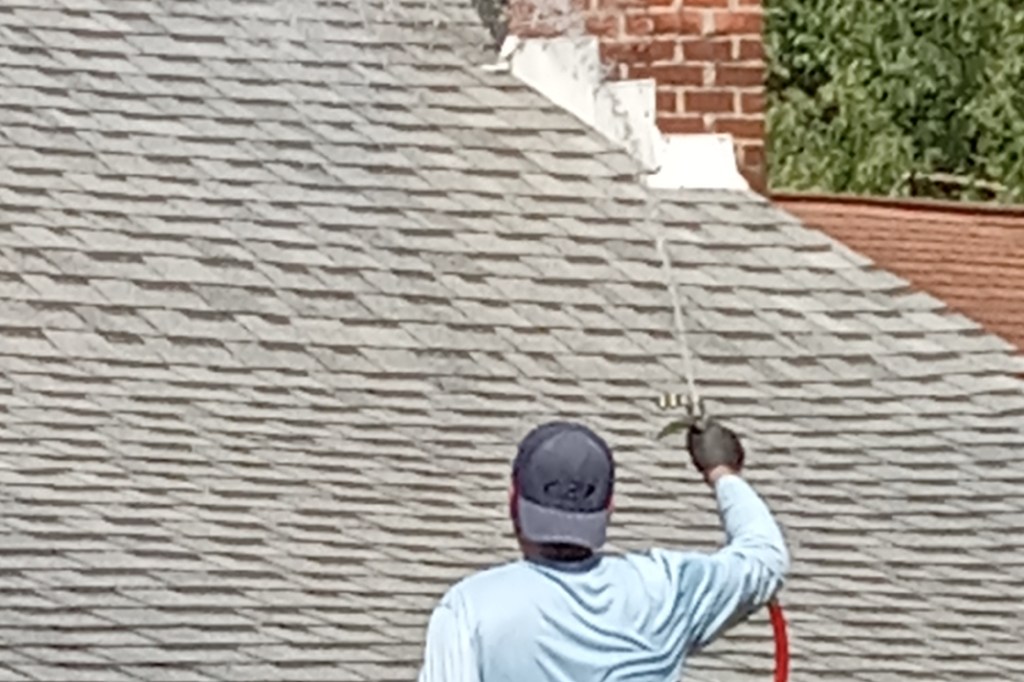
When performed correctly, soft washing is generally the preferred approach for cleaning asphalt shingle roofs.
Asphalt shingles can be damaged by aggressive pressure washing.
High-pressure cleaning may:
- Remove granules
- Damage the shingle surface
- Lift shingles
- Force water underneath the roofing system
Soft washing allows the algae, moss, and other organic growth to be treated without blasting the roof with high-pressure water.
This is particularly important for Pittsburgh homes because shaded, damp roofs can develop recurring algae and moss growth.
Related reading:
and
Why Does Roof Moss Keep Coming Back?
Is Soft Washing Safe for Vinyl Siding?
Yes, when the cleaning method is appropriate for the siding and the contractor uses proper procedures.
Vinyl siding can accumulate:
- Green algae
- Mildew
- Dirt
- Pollen
- Spider webs
- Environmental residue
Using excessive pressure can potentially force water behind siding panels or damage the surface.
Soft washing provides an alternative that uses cleaning solutions and low-pressure rinsing.
Is Soft Washing Safe for Stucco?
Stucco requires particular care.
High-pressure water can damage stucco or force water into areas where it doesn’t belong.
Soft washing allows contractors to clean the surface while minimizing pressure.
However, the condition of the stucco matters.
Cracks, damaged areas, deteriorated coatings, or existing water intrusion should be identified before cleaning.
Is Soft Washing Safe for Painted Surfaces?
Soft washing can be appropriate for many painted surfaces because it reduces the mechanical force applied to the coating.
However, contractors should consider:
- Paint condition
- Paint age
- Surface type
- Existing peeling
- Previous coatings
- Cleaning-solution compatibility
Old or deteriorated paint may require additional precautions.
Is Soft Washing Safe for Wood?
Wood requires careful consideration.
Soft washing can be appropriate for some wood surfaces, including siding, decks, and fences, but the cleaning method should be adjusted according to:
- Wood species
- Condition
- Existing finish
- Paint or stain
- Age
- Desired outcome
Wood should never be treated as if every surface can tolerate the same cleaning process.
Will Soft Washing Kill My Plants?
This is one of the most common homeowner concerns.
Cleaning solutions can potentially harm vegetation if they are improperly applied or allowed to contact plants at harmful concentrations.
That’s why professional property protection is an important part of the soft washing process.
A responsible contractor should take precautions such as:
- Pre-wetting vegetation
- Protecting sensitive plants
- Controlling overspray
- Using appropriate solution concentrations
- Rinsing vegetation as appropriate
- Monitoring runoff
Homeowners should ask contractors how they protect landscaping before hiring them.
Is Soft Washing Safe for Pets?
Soft washing should be treated like any other professional cleaning process involving cleaning chemicals.
Pets should be kept away from the work area while cleaning is taking place.
A professional contractor should be able to explain:
- What type of cleaning solution is being used
- Where it will be applied
- How the property will be protected
- When people and pets can safely return to the area
If you have pets, tell the contractor before the job begins.
Is Soft Washing Safe for People?
Professional exterior cleaning should include reasonable precautions to prevent people from coming into contact with cleaning solutions.
During a soft washing project, homeowners should:
- Keep children away from the work area
- Keep pets indoors or away from the cleaning area
- Keep windows and doors closed when appropriate
- Follow the contractor’s instructions
- Avoid entering areas being actively treated
The contractor should also follow appropriate safety procedures when handling and applying cleaning solutions.
Can Soft Washing Damage Windows?
Soft washing is generally performed at low pressure, but windows and screens still need to be treated appropriately.
Potential concerns include:
- Damaged screens
- Existing seal failures
- Water intrusion
- Overspray
- Staining from contaminants or mineral deposits
A professional cleaner should identify vulnerable windows and use appropriate techniques around them.
What About Gutters?
Gutters can generally be cleaned as part of an exterior maintenance project, but the cleaning method depends on the material and condition.
Aluminum gutters, painted gutters, and older gutter systems may require different techniques.
Soft washing can remove organic staining from gutter exteriors, while physical debris inside gutters generally requires a different cleaning approach.
Is Soft Washing Environmentally Safe?
There isn’t a simple yes-or-no answer.
Soft washing uses cleaning solutions, so responsible application and runoff management matter.
A professional contractor should consider:
- Solution concentration
- Amount of water used
- Nearby vegetation
- Storm drains
- Water runoff
- Sensitive surfaces
- Local conditions
The safest approach is to use the appropriate amount of cleaning solution for the specific job rather than applying more chemical than necessary.
What Can Go Wrong With Soft Washing?
Soft washing is safer than high-pressure cleaning for many surfaces, but poor technique can still cause problems.
Potential issues include:
Incorrect Chemical Concentration
Using too strong a solution can damage certain materials or vegetation.
Poor Overspray Control
Overspray can affect plants, outdoor furniture, vehicles, or other nearby property.
Insufficient Rinsing
Some surfaces require appropriate rinsing after treatment.
Cleaning the Wrong Surface
Not every exterior material should automatically be treated using the same soft washing process.
Lack of Property Protection
Professional preparation is an important part of safe exterior cleaning.
The takeaway is simple:
The safety of soft washing depends heavily on how it is performed.
How to Choose a Safe Soft Washing Company
Before hiring an exterior cleaning company, ask:
- What cleaning method will you use on my siding or roof?
- What cleaning solutions do you use?
- How do you protect plants?
- How do you control overspray?
- What pressure will you use?
- How do you protect windows and doors?
- Are you insured?
- Do you have experience with my type of exterior material?
A reputable professional should be willing to explain the process.
Be cautious of contractors who promise to “blast everything clean” without first discussing the materials being cleaned.
Soft Washing vs. Pressure Washing: Which Is Safer?
| Surface | Preferred Approach |
|---|---|
| Asphalt shingles | Soft washing |
| Vinyl siding | Soft washing |
| Stucco | Soft washing |
| Painted surfaces | Low-pressure/soft washing |
| Wood siding | Gentle/low-pressure cleaning |
| Wood decks | Low-pressure cleaning |
| Concrete driveway | Pressure washing |
| Concrete sidewalk | Pressure washing |
| Some masonry | Pressure or low-pressure cleaning depending on condition |
The safest cleaning method is the one appropriate for the surface—not necessarily the method that uses the most or least pressure.
Why This Matters for Pittsburgh Homeowners
Pittsburgh-area homes face conditions that encourage organic growth.
Humidity, frequent rainfall, mature trees, and shaded properties can contribute to:
- Algae
- Mold
- Mildew
- Moss
- Lichen
This makes exterior cleaning an important part of home maintenance throughout Pittsburgh, Allegheny County, Beaver County, Washington County, and Westmoreland County.
Homes beneath mature trees or in heavily shaded areas may require more frequent cleaning than homes with full sun exposure.
Frequently Asked Questions
Is soft washing safe for a house?
Yes. When performed correctly, soft washing can safely clean many residential exterior surfaces while using substantially less water pressure than traditional pressure washing.
Is soft washing safe for roofs?
Soft washing is generally preferred over high-pressure washing for asphalt shingle roofs because it minimizes the risk of damaging shingles and removing protective granules.
Is soft washing safe for vinyl siding?
Yes, when the cleaning solution and application method are appropriate for the siding. Low-pressure rinsing reduces the risk associated with aggressive pressure washing.
Will soft washing kill plants?
Improper application of cleaning chemicals can damage vegetation. Professional soft washing should include appropriate precautions to protect landscaping.
Can soft washing damage paint?
It can if the wrong solution or technique is used, particularly on old or deteriorated paint. The condition of the painted surface should be evaluated before cleaning.
Is soft washing better than pressure washing?
Neither method is universally better. Soft washing is generally better for delicate surfaces and organic growth, while pressure washing is better suited to many durable hard surfaces.
How long does soft washing last?
The results vary by surface and environmental conditions. Homes with heavy shade, moisture, and tree coverage may experience organic growth sooner than homes in sunny, dry environments.
The Bottom Line: Is Soft Washing Safe?
Professional soft washing can be a safe and effective way to clean many residential exterior surfaces—but the process needs to be performed correctly.
The low-pressure approach helps reduce the risk of damage to materials that shouldn’t be subjected to aggressive pressure, while specialized cleaning solutions address algae, mold, mildew, moss, and other organic growth.
The contractor’s experience, cleaning solutions, equipment, property-protection procedures, and knowledge of different exterior materials all matter.
For Pittsburgh homeowners, choosing a professional who understands the region’s weather and the unique challenges created by moisture, shade, and mature landscaping can make a significant difference.
Get a Safer, Professional Clean for Your Home
If you’re concerned about damaging your roof, siding, landscaping, or other exterior surfaces, don’t assume that more pressure means better cleaning.
So Clean Solutions uses professional exterior cleaning techniques designed around the surface being cleaned—not a one-size-fits-all approach.
We provide roof washing, house washing, soft washing, pressure washing, window cleaning, gutter cleaning, and other exterior cleaning services throughout Pittsburgh and the surrounding Western Pennsylvania communities.
Ready to Clean Your Home Without Taking Unnecessary Risks?
Contact So Clean Solutions today for a free estimate.
We’ll evaluate your property’s surfaces and recommend the appropriate cleaning method for your home.
Get your free estimate and discover why the right cleaning method matters.


Leave a Reply