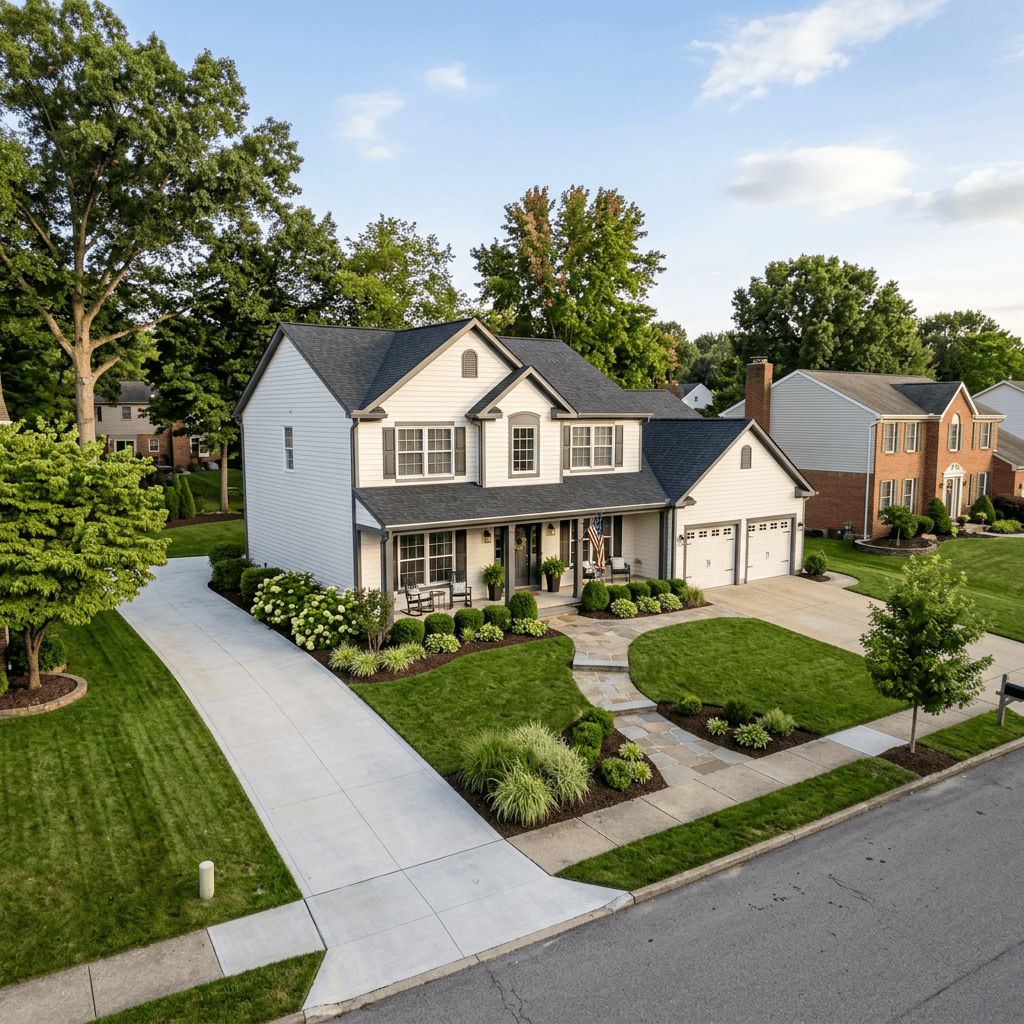
When you hire a professional to wash your home’s exterior or clean your roof, you probably focus on the results: brighter siding, fewer stains, and a cleaner-looking property.
But what happens after the cleaning solution has done its job?
At So Clean Solutions, we believe the finishing steps are an important part of a professional exterior cleaning process. That’s why we use a sodium hypochlorite neutralizing solution as a post-wash finishing rinse during our house washing and roof washing services.
This additional step is designed to address residual sodium hypochlorite, the active cleaning ingredient commonly used in many soft-washing applications. When the appropriate neutralizer is correctly applied according to its product instructions, it can help manage the remaining cleaning chemistry as part of a carefully controlled cleaning process.
For homeowners, business owners, and property managers throughout Pittsburgh and southwestern Pennsylvania, understanding this step can help you make a more informed decision when choosing an exterior cleaning company.
What Is a Post-Wash Neutralizing Rinse?
A post-wash neutralizing rinse is a solution applied after a cleaning treatment to chemically react with a specific residual chemical.
In house washing and roof washing, the relevant cleaning chemical is often sodium hypochlorite, commonly referred to as SH or bleach. It is widely used in professional soft washing because of its ability to treat algae, mildew, and other organic growth.
Although the cleaning solution does its work during the wash, residual sodium hypochlorite may remain on treated surfaces or enter runoff areas. A compatible neutralizing solution is designed to react with that residual chemical.
The purpose is to add a chemistry-specific finishing step to the cleaning process.
It is important to understand that not every rinse is a neutralizer. Water helps dilute and physically remove cleaning residues. A neutralizer is formulated to react chemically with a particular substance. Depending on the product and application, both steps may have a role in an appropriate cleaning procedure.
At So Clean Solutions, we incorporate a sodium hypochlorite neutralizing rinse into our house washing and roof washing process as part of our approach to responsible exterior cleaning.
Why Does Neutralization Matter After House Washing?
Your home’s exterior includes more than siding. It may include window frames, painted trim, doors, light fixtures, gutters, outdoor furniture, decorative features, and landscaping.
During a house wash, these different materials and surrounding areas can be exposed to cleaning solution, overspray, or runoff. Their compatibility with cleaning chemicals varies.
A properly selected neutralizing rinse can provide an additional way to manage residual sodium hypochlorite after the main cleaning treatment.
Potential benefits include:
1. Additional management of residual cleaning chemistry
A conventional water rinse helps remove and dilute cleaning solution. A compatible neutralizer provides a different function: it is formulated to react with residual sodium hypochlorite.
This distinction matters because the appropriate finishing process depends on the chemicals used, the surfaces involved, and the product manufacturer’s directions.
2. An additional consideration for exterior surface care
Home exteriors contain a variety of materials, coatings, and finishes. Some metals, painted surfaces, and decorative components may be sensitive to certain cleaning chemicals under particular exposure conditions.
Using an appropriate neutralizing treatment can be one component of a surface-specific cleaning procedure. It does not guarantee that every material is protected from all discoloration, corrosion, or other damage, which is why inspection, careful chemical application, and appropriate rinsing remain important.
3. A more deliberate finishing process
A professional house wash should involve more than applying a cleaning solution and moving to the next property.
The finishing procedure should account for the cleaning chemistry, treated materials, nearby surfaces, and runoff conditions. Incorporating an appropriate neutralizer gives the contractor another step to consider when completing the job.
4. Greater transparency about the cleaning process
When comparing exterior cleaning estimates, homeowners often focus on price and the appearance of the finished property.
Asking about the finishing process can reveal more about how a contractor approaches chemical handling, surface care, and quality control.
At So Clean Solutions, we want customers to understand not only what we clean, but also how we approach the work from preparation through the finishing steps.
Why Is a Neutralizing Rinse Relevant to Roof Washing?
Roof washing requires special consideration because cleaning chemicals may remain on roofing surfaces and travel through gutters or over roof edges.
In the Pittsburgh area, asphalt shingles, slate, tile, and metal roofing can develop algae, moss, and other visible buildup. Professional soft washing uses an appropriate cleaning treatment and application method for the roofing material rather than relying on aggressive pressure.
However, the roof itself is only part of the picture. Gutters, downspouts, siding, metal flashing, landscaping, and other areas may also need attention during the cleaning process.
A post-wash sodium hypochlorite neutralizer can be part of the finishing procedure when it is compatible with the roof-washing treatment and applied according to the manufacturer’s instructions.
The benefits depend on the product, its intended use, and how the cleaning job is managed. Neutralization should complement—not replace—appropriate application rates, runoff management, vegetation protection, and any required rinsing.
Managing roof runoff
During roof washing, some cleaning solution may flow toward gutters, downspouts, and landscaped areas.
A neutralizing treatment may help manage residual sodium hypochlorite where the selected product is intended for that application. The specific method should account for the roof material, the amount and concentration of the cleaning solution, drainage conditions, and product directions.
A neutralizer is not a substitute for protecting plants, managing runoff, or preventing inappropriate chemical discharge.
Paying attention to roofing materials and metal components
Roofs can include a combination of shingles, slate, tile, metal flashing, gutters, fasteners, and other components.
These materials do not all respond identically to cleaning chemistry. A contractor should consider material compatibility and follow the appropriate procedures for the particular roof being cleaned.
A neutralizing rinse is one possible component of that process, but it should never be presented as a guarantee against corrosion or surface damage.
Completing the job thoughtfully
A roof may look dramatically better after treatment, but appearance alone does not describe every step involved in a professional cleaning.
The finishing process should address the specific cleaning chemistry and property conditions, including any areas that may have been exposed to runoff. That is especially important for homes with extensive landscaping or complex rooflines.
Does a Neutralizing Rinse Replace a Water Rinse?
No. These steps perform different functions, and one should not automatically be treated as a replacement for the other.
A water rinse helps dilute and physically remove residues from a surface. A compatible neutralizer is designed to chemically react with a specific residual substance.
The appropriate sequence depends on the neutralizer’s label, the cleaning solution used, the surface, and the intended application.
For example, some products require pre-rinsing before neutralizer application and additional rinsing afterward. Other procedures may differ. The product manufacturer’s instructions should determine the actual method.
This is why it is important to ask a cleaning contractor what product is being used, what it is intended to neutralize, and how it fits into the overall process.
Is a Neutralizing Rinse Necessary After Every House Wash or Roof Wash?
There is no universal answer that applies to every exterior cleaning job.
The need for a neutralizing rinse depends on factors such as:
- The cleaning chemicals used.
- The concentration and application method.
- The type and condition of the surface.
- The potential for residual chemical exposure.
- The manufacturer’s instructions for the cleaning product and neutralizer.
- The property’s drainage, landscaping, and surrounding materials.
A sodium hypochlorite neutralizer is specifically intended to address residual sodium hypochlorite when used as directed. It should not be assumed to neutralize unrelated cleaning agents or every chemical present in a wash solution.
At So Clean Solutions, we use a sodium hypochlorite neutralizing solution as a finishing rinse for our house washing and roof washing services. We consider this step alongside the other procedures required for the particular cleaning application.
What About Landscaping, Pets, and the Environment?
Protecting the surrounding property is an important consideration during exterior cleaning.
Plants may be sensitive to cleaning chemicals, and runoff can travel beyond the surface being washed. A compatible neutralizer may be useful for managing residual sodium hypochlorite in applications for which the product is designed.
However, a neutralizing rinse is not a guarantee of plant safety or environmental safety. It does not make every chemical harmless, reverse damage that has already occurred, or eliminate the need for appropriate precautions.
Responsible exterior cleaning may involve:
- Evaluating landscaping and other sensitive areas before work begins.
- Following appropriate pre-wetting and watering procedures where needed.
- Applying cleaning solutions carefully and at suitable concentrations.
- Managing runoff and preventing unintended chemical exposure.
- Using neutralizing products only for their labeled purposes.
- Performing any required rinsing and final checks.
These measures work together. No single finishing product replaces the need for proper training, chemical handling, and sound cleaning practices.
Does a Neutralizing Rinse Increase the Value of a Professional Cleaning Service?
The value of a professional exterior cleaning service should be evaluated as a complete process rather than by one step alone.
For homeowners, the value includes the visible cleaning results, the suitability of the cleaning method for the property, and the care taken during the job.
For business owners and commercial property managers, the process may also include consistent procedures, documented service expectations, and attention to different building materials and surrounding areas.
A neutralizing rinse is one part of that broader picture.
When comparing estimates, consider asking contractors:
- What cleaning solution do you use for my property?
- How do you manage residual cleaning chemicals?
- Do you use a neutralizer, and what is it designed to neutralize?
- How do you protect landscaping and manage runoff?
- What additional rinsing or inspection steps are included?
- Are your procedures appropriate for my siding, roofing, trim, and other materials?
The answers can help you understand what is included in the service and whether the contractor has a clear, surface-specific process.
Why Choose So Clean Solutions for House Washing and Roof Washing in Pittsburgh?
So Clean Solutions provides exterior cleaning services for homeowners and businesses in Pittsburgh and surrounding southwestern Pennsylvania communities.
Our services include professional soft washing, house washing, and roof washing.
We use a sodium hypochlorite neutralizing solution as a post-wash finishing rinse for our house washing and roof washing services. This step is part of our approach to managing residual cleaning chemistry, alongside the appropriate cleaning, rinsing, and property-care procedures for the job.
We believe property owners should understand the methods used on their homes and buildings. Whether you are removing algae from siding, addressing black streaks on a roof, or maintaining a commercial property, we can discuss your cleaning needs and explain the process included in your estimate.
Our goal is to deliver professional exterior cleaning with attention to the property, the materials being cleaned, and the details that matter throughout the job.
Frequently Asked Questions
1. What is a sodium hypochlorite neutralizer?
It is a product formulated to chemically react with residual sodium hypochlorite, commonly known as bleach. When the appropriate product is used correctly, it can help manage residual sodium hypochlorite following a cleaning treatment.
2. Why use a neutralizing rinse after house washing?
A compatible neutralizing rinse can help address residual sodium hypochlorite after a house wash. It is one component of a complete cleaning process that may also include careful chemical application, water rinsing, surface inspection, and landscaping precautions.
3. Why use a neutralizing rinse after roof washing?
Roof washing can involve cleaning solution contacting roofing materials, gutters, downspouts, and nearby property. An appropriate neutralizer may help manage residual sodium hypochlorite when used according to its directions and as part of a properly planned roof-cleaning procedure.
4. Does a neutralizer protect plants from bleach damage?
It may help manage residual sodium hypochlorite in applications for which the product is designed, but it cannot guarantee that plants will not be damaged. Appropriate watering, application control, runoff management, and other precautions remain important.
5. Can a neutralizing rinse prevent corrosion on gutters or metal trim?
It should not be considered a guarantee against corrosion. The outcome depends on the metal, its finish, the cleaning chemical, exposure conditions, and the cleaning procedure. Material compatibility and appropriate rinsing remain essential.
6. Is a neutralizing rinse the same as a water rinse?
No. Water helps dilute and remove residues physically. A neutralizer is formulated to react chemically with a particular substance. Depending on the product instructions and cleaning application, both may be appropriate.
7. Does every house-washing company use a neutralizer?
No. Procedures vary between companies and cleaning applications. Ask the contractor which cleaning chemistry is used, whether a neutralizer is included, and how the finishing procedure is selected for your property.
8. Does So Clean Solutions use a neutralizing rinse?
Yes. So Clean Solutions uses a sodium hypochlorite neutralizing solution as a post-wash finishing rinse for house washing and roof washing. The product is used as part of the broader cleaning process, with application guided by the product instructions and the requirements of the job.
Schedule Your House Washing or Roof Washing Estimate
A clean exterior can make a meaningful difference in the appearance of your home or commercial property. Choosing a professional who considers the entire cleaning process can help you make a more informed maintenance decision.
So Clean Solutions serves Pittsburgh and surrounding communities throughout southwestern Pennsylvania.
Whether your siding has developed green algae, your roof has dark streaks, or your commercial property needs exterior maintenance, our team can help you evaluate your options.
Contact So Clean Solutions to request an estimate for professional house washing or roof washing.
Call 412-513-3751 or visit getsoclean.com to get started.


Leave a Reply