Keeping a commercial property clean is an important part of maintaining its appearance, protecting its value, and creating a positive impression for customers, tenants, and visitors.
Over time, sidewalks, building exteriors, concrete, entrances, parking areas, and other outdoor surfaces accumulate dirt, algae, oil stains, gum, and environmental residue. Professional commercial pressure washing can help restore these surfaces and keep your property looking well maintained.
But how much does commercial pressure washing cost in Pittsburgh?
The answer depends on the size of the property, the surfaces being cleaned, the amount of buildup, accessibility, and the scope of work.
This guide explains the factors that influence commercial pressure washing prices, which services businesses should consider, and how to evaluate estimates from exterior cleaning companies.
Quick Answer: How Much Does Commercial Pressure Washing Cost in Pittsburgh?
Commercial pressure washing costs vary significantly from one property to another. A small storefront sidewalk requires a different investment than a large shopping center, apartment complex, restaurant, or multi-building commercial property.
The most important pricing factors include:
- Total square footage or linear footage
- Type of surface being cleaned
- Amount and type of dirt or staining
- Accessibility and site layout
- Water availability
- Cleaning equipment and labor requirements
- Required cleaning methods
- Scheduling restrictions
- Whether the work is a one-time project or recurring service
For an accurate price, request a property-specific estimate that identifies the surfaces to be cleaned and the work included.
For commercial property owners, the best value isn’t necessarily the lowest initial price. It’s a cleaning plan that meets the property’s needs, protects the surfaces, and fits the maintenance budget.
What Is Included in Commercial Pressure Washing?
Commercial pressure washing is a broad category that can include several different exterior cleaning services.
Depending on the property, a cleaning project may include:
Commercial Concrete Cleaning
Concrete sidewalks, entrances, patios, loading areas, and other hard surfaces collect dirt and staining from daily use.
Cleaning may address:
- General dirt and grime
- Algae and organic growth
- Tire marks
- Certain oil stains
- Food and beverage residue
- Gum
- Seasonal residue
The appropriate method depends on the concrete’s condition, the type of contamination, and the surrounding environment.
Commercial Building Washing
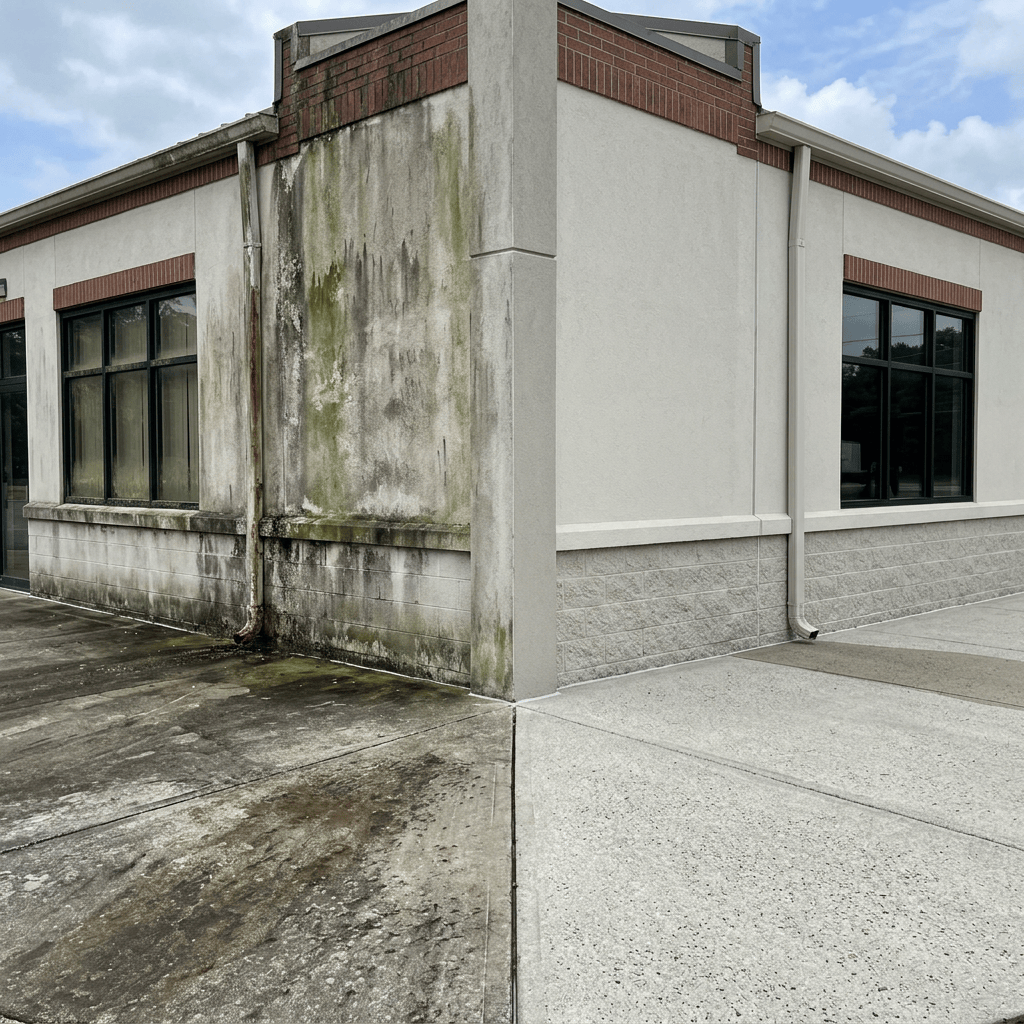
Exterior walls can accumulate dirt, pollen, algae, mildew, and other contaminants.
Professional building washing can improve the appearance of storefronts, offices, apartment buildings, and other commercial properties.
The cleaning method should be selected according to the building material. Siding, painted surfaces, masonry, stucco, and other materials may require different approaches.
Restaurant and Retail Exterior Cleaning
Restaurants and retail businesses often need special attention around customer entrances and high-traffic areas.
Potential cleaning areas include:
- Storefront sidewalks
- Restaurant patios
- Exterior entrances
- Dumpster pads
- Service areas
- Walkways
- Other heavily used surfaces
Restaurants may also have grease-related contamination that requires a suitable cleaning process and appropriate wastewater management.
Apartment and Multifamily Property Cleaning
Multifamily properties have shared exterior areas that residents and prospective tenants use every day.
Cleaning projects may include:
- Sidewalks
- Breezeways
- Building entrances
- Clubhouse exteriors
- Common concrete areas
- Pool decks
- Dumpster areas
A recurring cleaning schedule can help property managers maintain consistent standards across their properties.
Commercial Roof Washing
Some commercial roofs develop algae, moss, or other organic growth.
Roof cleaning is a specialized service and should not automatically be treated as standard pressure washing. The appropriate process depends on the roofing material, roof condition, access requirements, and site-specific considerations.
If roof cleaning is needed, request a separate scope of work so you can evaluate the service appropriately.
What Factors Affect Commercial Pressure Washing Prices?
1. Size of the Property
Larger properties generally require more labor, water, equipment time, and preparation.
However, price doesn’t always increase in direct proportion to square footage.
A large, open concrete area may be more efficient to clean than a smaller area with numerous obstacles, heavy staining, or difficult access.
2. Surface Material
Different materials require different cleaning methods.
For example:
- Concrete may tolerate appropriately controlled pressure washing.
- Vinyl siding often benefits from low-pressure cleaning.
- Painted surfaces require careful pressure and chemical selection.
- Wood can be damaged by excessive pressure.
- Roofs require methods appropriate for the roofing material.
The estimate should account for the materials being cleaned and the safest effective approach.
3. Type and Severity of Contamination
Routine dirt removal is different from removing heavy grease, embedded grime, gum, or established organic growth.
Some contaminants require additional preparation, suitable cleaning solutions, longer dwell times, or specialized equipment.
Heavily neglected surfaces may therefore cost more to clean than surfaces maintained on a recurring schedule.
4. Accessibility
Commercial properties can contain obstacles that increase labor requirements.
Examples include:
- Parked vehicles
- Outdoor furniture
- Landscaping
- Fences
- Loading equipment
- Restricted work areas
- Multiple building levels
- Limited equipment access
If a property requires extensive preparation or special access arrangements, those requirements should be reflected in the estimate.
5. Business Operating Hours
Some commercial properties need cleaning before opening, after closing, or during other restricted time windows.
Restaurants, retail stores, medical facilities, and busy office buildings may require careful scheduling to minimize disruption.
The availability of water, access to the work area, and the need to coordinate with tenants or employees can also affect the project.
6. Water Supply and Wastewater Management
Commercial cleaning may require planning for water access and wastewater handling.
Depending on the site and the type of contamination, the contractor may need to address runoff, protect nearby landscaping, or follow applicable wastewater-disposal requirements.
Grease, chemicals, and other contaminants can create additional handling considerations.
Discuss these requirements before work begins.
7. One-Time Cleaning vs. Recurring Maintenance
A one-time deep cleaning and a recurring maintenance program are not necessarily priced the same way.
A recurring schedule can help prevent heavy buildup and make future cleaning more predictable.
Depending on the property’s condition and service requirements, a maintenance agreement may also simplify scheduling and budgeting.
Ask for pricing for both options if your property needs regular service.
How Is Commercial Pressure Washing Priced?
Commercial cleaning contractors may use several pricing approaches.
Price per Square Foot
Square-foot pricing can be useful for large, relatively uniform surfaces such as open concrete areas.
However, the rate may vary according to contamination, access, surface type, and the amount of preparation required.
A square-foot price for a large open sidewalk should not automatically be applied to a grease-covered restaurant area or a delicate building exterior.
Price by Linear Foot
Linear-foot pricing may be useful for certain narrow or continuous surfaces, depending on the contractor’s estimating method.
The estimate should clearly identify the length and type of surface included.
Price by Project
A project-based estimate provides one price for an agreed scope of work.
This approach can be useful when a property contains several surface types or when the job requires multiple cleaning methods.
Recurring Service Agreement
Recurring service pricing can be useful for property managers and businesses that need predictable exterior maintenance.
The agreement should identify:
- Areas included
- Cleaning frequency
- Scope of work
- Scheduling expectations
- Additional-service charges
- Responsibilities for site preparation
Regardless of the pricing method, make sure you understand exactly what the contractor will clean.
How Much Does It Cost to Clean Different Commercial Areas?
The following table explains how costs are typically evaluated. It is not a price quote; actual pricing depends on the property and the scope of work.
| Commercial Area | Main Pricing Considerations |
|---|---|
| Storefront sidewalks | Square footage, foot traffic, gum, staining |
| Restaurant patios | Surface type, grease, furniture, operating hours |
| Building exteriors | Material, height, access, organic growth |
| Apartment walkways | Total area, number of buildings, recurring frequency |
| Dumpster pads | Grease, residue, wastewater handling |
| Parking areas | Size, traffic, oil staining, access |
| Commercial roofs | Roof type, condition, access, specialized cleaning method |
| Office entrances | Foot traffic, surface type, scheduling restrictions |
For larger properties, it may be useful to request separate prices for each area rather than a single combined number.
This helps you prioritize the work if your maintenance budget is limited.
Is Commercial Pressure Washing Worth the Investment?
For many businesses, exterior cleaning is a practical part of property maintenance.
The benefits can include:
Better First Impressions
Customers and prospective tenants often notice exterior conditions before entering a building.
Clean entrances, sidewalks, and building surfaces can help reinforce a professional image.
More Consistent Property Maintenance
A planned cleaning schedule helps property managers address visible buildup before it becomes a larger maintenance concern.
Improved Appearance of Common Areas
Apartment communities, office buildings, and shopping centers often have shared spaces that influence how residents, tenants, and visitors perceive the property.
Easier Budget Planning
Recurring cleaning can make it easier to anticipate maintenance expenses and coordinate services across multiple properties.
Earlier Identification of Visible Problems
Cleaning and inspection may reveal loose materials, deteriorated surfaces, or other issues that were obscured by dirt.
Cleaning itself does not repair these problems, but identifying them can help property owners determine what additional work may be needed.
Can Recurring Commercial Cleaning Reduce Costs?
It can, depending on the property.
When dirt, algae, and other contaminants accumulate for long periods, cleaning may require more time and additional treatment.
A recurring maintenance plan can help keep buildup manageable.
For example, a retail property may schedule routine sidewalk cleaning while arranging separate building washing when needed.
An apartment community may prioritize high-traffic walkways and entrances while scheduling broader exterior cleaning periodically.
The most effective schedule depends on the property’s use, environmental exposure, and appearance standards.
The objective is to clean often enough to maintain the property without paying for unnecessary service.
When Is the Best Time to Pressure Wash a Commercial Property in Pittsburgh?
Pittsburgh’s seasonal conditions can influence commercial cleaning schedules.
Spring
Spring is a common time to address winter grime, salt residue, dirt, and accumulated debris.
It can be a good opportunity to prepare sidewalks, entrances, and building exteriors for increased activity.
Summer
Summer can be useful for maintaining outdoor dining areas, retail entrances, patios, and other high-traffic spaces.
Businesses may also need spot cleaning throughout the season.
Fall
Fall cleaning can address summer buildup, organic growth, and debris before winter.
Gutters, sidewalks, and drainage areas may need particular attention.
Winter
Cold temperatures and freezing conditions can limit which cleaning services can be performed safely and effectively.
Service availability depends on weather, surface temperatures, water conditions, and the specific cleaning process.
For many properties, scheduling major exterior cleaning during suitable spring, summer, or fall conditions is a practical starting point.
How to Compare Commercial Pressure Washing Estimates
Before choosing a contractor, compare the actual scope of work rather than looking only at the bottom-line price.
Ask each company:
- Which surfaces are included?
- Is the quoted area measured or estimated?
- What cleaning method will be used?
- Are specialized treatments included?
- Are preparation and cleanup included?
- How will landscaping and nearby property be protected?
- Are water access and wastewater handling addressed?
- Does the quote include all buildings and designated areas?
- Is after-hours scheduling available if needed?
- Can the contractor provide recurring maintenance?
Also verify appropriate insurance and ask about experience with properties similar to yours.
A clear written estimate reduces the chance of misunderstandings and makes it easier to compare proposals fairly.
Commercial Pressure Washing for Pittsburgh Businesses
Commercial properties throughout the Pittsburgh region face a variety of exterior maintenance challenges.
Rainfall, mature trees, seasonal leaf accumulation, humidity, winter salt, and everyday traffic can all contribute to exterior buildup.
The specific conditions vary by property.
A restaurant with outdoor seating has different needs from an office building. A multifamily property with numerous walkways requires a different plan from a small retail storefront.
That is why commercial cleaning estimates should reflect the actual property rather than relying on a generic price.
So Clean Solutions serves the Pittsburgh area with exterior cleaning services for residential and commercial properties.
Businesses and property managers in Pittsburgh, Allegheny County, Beaver County, Washington County, and Westmoreland County can request an estimate based on their property’s needs.
Frequently Asked Questions
How much does commercial pressure washing cost in Pittsburgh?
The price depends on the size of the area, surface type, contamination, accessibility, equipment requirements, and scope of work. A property-specific estimate is the best way to determine the actual cost.
How do commercial pressure washing companies calculate prices?
Contractors may price by square footage, linear footage, project, or recurring service agreement. The best method depends on the property and the work involved.
Is commercial pressure washing more expensive than residential pressure washing?
It can be, but not in every case. Commercial properties may involve larger areas, restricted operating hours, multiple surfaces, heavier contamination, or additional site requirements. A small commercial job may be simpler than a complex residential project.
How often should a commercial property be pressure washed?
Many commercial properties benefit from exterior cleaning once or twice a year. Restaurants, busy retail locations, and other high-traffic properties may need more frequent service.
Can commercial buildings be soft washed instead?
Yes. Soft washing or low-pressure cleaning may be appropriate for building siding, roofs, and other surfaces that could be damaged by aggressive pressure. The method should match the material and contamination.
Can a business schedule cleaning outside operating hours?
Some contractors offer early-morning, evening, or other off-hours scheduling. Confirm availability and any additional costs before booking.
Does commercial pressure washing include dumpster pads and sidewalks?
Not automatically. The estimate should list the areas included. Dumpster pads, sidewalks, building exteriors, and parking areas may require separate line items.
Is a recurring commercial cleaning contract worth considering?
A recurring agreement may be useful for properties that need predictable maintenance. Compare the scope, frequency, scheduling terms, and total cost before committing.
The Bottom Line
Commercial pressure washing prices depend on more than the size of a building.
Surface materials, staining, accessibility, operating schedules, wastewater considerations, and cleaning frequency all influence the cost.
For business owners and property managers, the best approach is to identify the areas that need attention, request a clearly defined estimate, and establish a maintenance schedule that fits the property’s needs.
Regular exterior cleaning can help maintain a professional appearance and make property maintenance more predictable.
Request a Commercial Exterior Cleaning Estimate
Is your commercial property ready for its next cleaning?
So Clean Solutions provides professional exterior cleaning services for businesses, property managers, real estate professionals, and commercial property owners throughout the Pittsburgh area.
Whether you need storefront sidewalk cleaning, building washing, concrete cleaning, or a recurring maintenance plan, we can help you identify the services appropriate for your property.
Call So Clean Solutions at 412-513-3751 or request a free estimate online.
Let’s develop an exterior cleaning plan that fits your property, your schedule, and your maintenance budget.


Leave a Reply