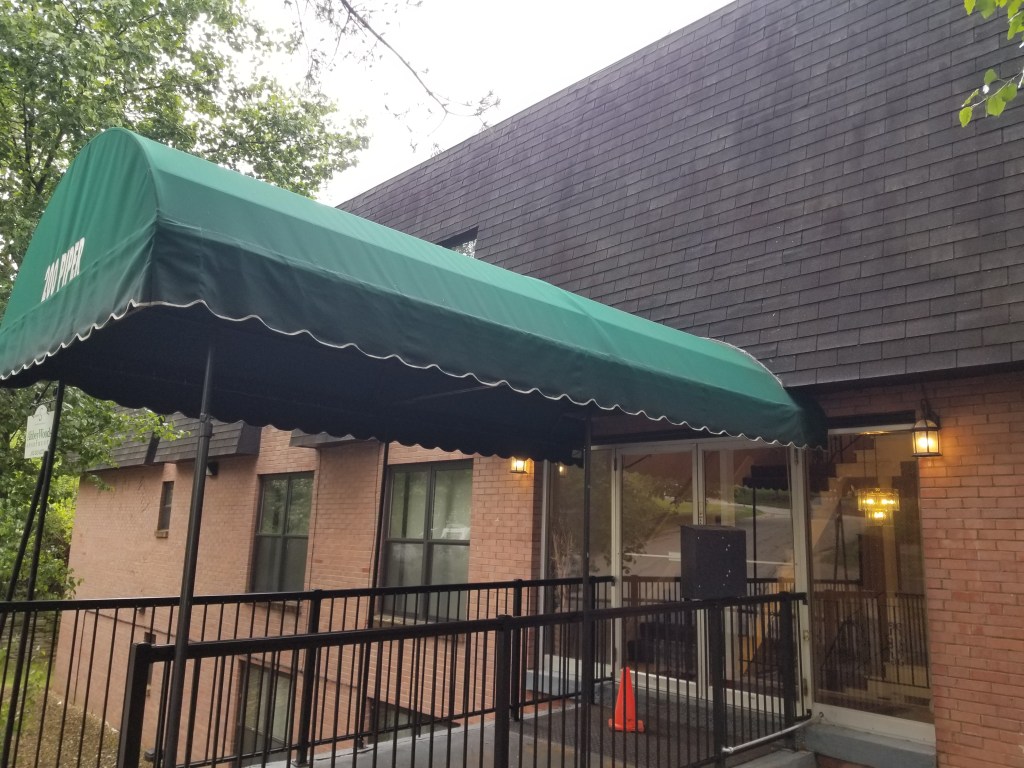
Awnings do more than provide shade or shelter. On a commercial property, they can be one of the first features customers notice when approaching a storefront, restaurant, office, or retail center.
Over time, however, outdoor awnings collect dirt, pollen, bird droppings, atmospheric grime, and other environmental buildup. Depending on the material and surrounding conditions, they may also develop algae, mildew, discoloration, or stubborn stains.
For Pittsburgh-area businesses, routine commercial awning cleaning can help maintain a professional exterior appearance and keep storefronts looking cared for.
So, what is the best way to clean a commercial awning?
The best cleaning method depends on the awning’s material, condition, construction, and type of buildup. Fabric, vinyl, and metal awnings have different cleaning requirements, and using an unsuitable method can damage the material, finish, seams, or protective coating.
This guide explains what Pittsburgh business owners and property managers should know about commercial awning cleaning, how to choose an appropriate cleaning approach, and when to schedule service.
Why Commercial Awning Cleaning Matters
Commercial awnings are exposed to the elements throughout the year. Rain, wind, pollen, nearby trees, vehicle emissions, and everyday activity can contribute to visible buildup.
A dirty awning can make an otherwise well-maintained business appear neglected. Regular cleaning helps keep this prominent exterior feature consistent with the appearance you want customers and visitors to associate with your business.
Professional commercial awning cleaning can help businesses:
- Maintain a clean, professional storefront appearance.
- Remove accumulated dirt, pollen, and compatible surface contaminants.
- Improve the appearance of entrances and customer-facing areas.
- Complement building washing, window cleaning, and sidewalk cleaning.
- Establish a more consistent exterior maintenance schedule.
- Identify visible wear or damage before cleaning begins.
Cleaning does have limits. It cannot repair torn fabric, failed seams, corrosion, peeling coatings, or permanent discoloration. Identifying these conditions before work begins helps set realistic expectations.
Which Businesses Benefit from Commercial Awning Cleaning?
Awning cleaning can be useful for a variety of commercial properties throughout Pittsburgh and Southwestern Pennsylvania.
Retail Stores and Shopping Centers
Storefront awnings are prominent features that frame entrances, windows, and business signage. Removing accumulated dirt and environmental buildup can help retail properties maintain a consistent appearance across multiple storefronts.
For shopping centers and retail property managers, coordinating awning cleaning with other exterior services may also simplify maintenance scheduling.
Restaurants, Cafés, and Bars
Restaurants and cafés may have awnings over entrances, windows, outdoor seating areas, or sidewalk-facing storefronts.
These surfaces can collect pollen, food-related splashes, bird droppings, and general outdoor grime. The cleaning plan should account for nearby dining areas, customer access, food-service operations, and the protection of surrounding surfaces.
Schedule work to minimize disruption, and establish any necessary precautions around food, equipment, pedestrians, and outdoor seating before cleaning begins.
Office and Professional Buildings
Office buildings, medical practices, and professional businesses may use awnings to cover entrances or distinguish building sections.
Keeping these features clean can complement other maintenance tasks, including window washing and building exterior cleaning.
Apartment and Condominium Communities
Multifamily properties may have awnings over individual units, common entrances, amenity spaces, or leasing offices.
Property managers can evaluate these features as part of a broader exterior maintenance plan rather than waiting until visible buildup becomes a concern.
Fabric, Vinyl, and Metal Awnings Require Different Approaches
One of the most important steps in commercial awning cleaning is identifying the material before choosing a method.
Fabric Awning Cleaning
Fabric awnings may have woven materials, seams, stitching, coatings, or water-resistant treatments that require special consideration.
Cleaning should account for:
- The type and condition of the fabric.
- Manufacturer cleaning recommendations, when available.
- Existing tears, holes, failed seams, or loose attachments.
- The type of staining or organic buildup.
- Whether the fabric has a coating that could be affected by cleaning.
Aggressive pressure washing may damage some fabrics or their construction. A suitable approach may involve a compatible cleaning solution, controlled application, appropriate dwell time, gentle agitation when necessary, and a carefully managed rinse.
Not every stain can be removed completely. Oxidation, material aging, and long-term discoloration may remain after cleaning.
Vinyl Awning Cleaning
Vinyl awnings are common on commercial storefronts and entrances. They can accumulate dirt, pollen, algae, mildew, and other environmental contaminants.
The appropriate cleaning method depends on the vinyl’s condition, finish, and the type of buildup present.
Before cleaning, check for brittle material, cracking, peeling, discoloration, or other signs of deterioration. The cleaning solution and rinse procedure should be compatible with the material and surrounding finishes.
High pressure should not be assumed necessary simply because vinyl is a relatively durable material.
Metal Awning Cleaning
Metal awnings may have painted, powder-coated, or other finished surfaces. They can collect dirt, pollen, bird droppings, pollution, and water-related staining.
The cleaning process should consider the type of metal, its coating, and any visible oxidation or corrosion.
A suitable approach may use compatible cleaning products, controlled agitation, and a managed rinse. Excessive pressure or an incompatible chemical can damage finishes or make existing defects more apparent.
If the paint is peeling or the metal is corroded, cleaning alone will not restore the damaged finish.
Is Pressure Washing Safe for Commercial Awnings?
Not automatically. Awnings should not be cleaned using the same settings or procedures intended for concrete sidewalks or other durable hard surfaces.
The correct approach depends on the awning’s material, condition, attachments, and manufacturer guidance. Some awnings may be suitable for carefully controlled low-pressure cleaning, while others require a more specialized process.
Before choosing a method, a professional should assess:
- Material: Is the awning fabric, vinyl, metal, or a combination?
- Condition: Are there tears, loose seams, corrosion, brittle sections, or failing coatings?
- Contamination: Is the problem ordinary dirt, organic growth, grease, or another type of stain?
- Surrounding property: Are there nearby windows, signs, landscaping, painted surfaces, or customer areas that need protection?
- Water management: Where will rinse water travel, and are there drains or pedestrian areas that require attention?
A low-pressure method is not automatically safe, either. Cleaning chemicals, concentration, contact time, and runoff management must also be considered.
The objective is to remove compatible buildup while avoiding unnecessary risk to the awning and surrounding property.
What Does Commercial Awning Cleaning Involve?
Although every property is different, a professional cleaning process typically includes several steps.
Step 1: Inspect the Awning
Identify the material, visible contamination, access requirements, and any existing damage. Determine whether the awning appears suitable for cleaning and whether manufacturer instructions should be consulted.
Step 2: Prepare the Area
Consider customer access, nearby landscaping, doors, windows, signage, outdoor furniture, and other vulnerable surfaces.
For restaurants and other food-service businesses, plan the work around operations and take appropriate precautions for nearby food, equipment, and dining areas.
Step 3: Select the Cleaning Method
Choose compatible products and application methods based on the material and the type of buildup. Avoid assuming that one cleaning solution or pressure setting is appropriate for every awning.
Step 4: Clean and Rinse as Appropriate
Apply the selected cleaning process in a controlled manner. Where needed, use suitable agitation and rinse procedures without placing unnecessary stress on seams, coatings, attachments, or nearby surfaces.
Step 5: Review the Results
Inspect the awning after cleaning. Note any remaining stains, oxidation, discoloration, or damage that cleaning could not correct.
A clear review helps the customer understand the result and plan any separate repair or replacement work that may be needed.
How Often Should a Commercial Awning Be Cleaned?
There is no universal schedule for every business. Annual cleaning can be a useful starting point for many awnings, but the ideal frequency depends on exposure, material, foot traffic, nearby trees, weather, and appearance standards.
Consider these factors when planning maintenance:
- High-visibility storefronts: Review the awning regularly because appearance may be especially important to the business.
- Restaurants and cafés: Consider the effects of nearby outdoor seating, food-related splashes, and daily customer activity.
- Tree-covered properties: Pollen, leaves, and other organic debris may require more frequent attention.
- Awnings exposed to traffic: Road grime and airborne contaminants may accumulate more quickly.
- Multifamily or multi-site properties: Coordinate cleaning with building washing and other scheduled exterior maintenance.
Inspect awnings periodically and arrange cleaning when buildup warrants it. A recurring plan should be based on the actual condition of the property rather than an arbitrary schedule.
What Affects the Cost of Commercial Awning Cleaning in Pittsburgh?
Commercial awning cleaning costs vary by property. An accurate estimate should consider the work involved rather than relying on a single price for every awning.
Important factors include:
- Awning size: Larger awnings generally require more labor and cleaning materials.
- Material and condition: Fabric, vinyl, and metal may require different methods.
- Soiling and staining: Heavy buildup or difficult-to-address stains may require additional work.
- Height and access: Access equipment, building layout, and safe working conditions can affect the job.
- Number of awnings: Multiple awnings may offer scheduling efficiencies, depending on the property.
- Site preparation: Protecting nearby signage, landscaping, entrances, and customer areas may add time.
- Scheduling requirements: Work outside normal business hours or around operating restrictions may affect the estimate.
- Related services: Combining awning cleaning with suitable building washing, window cleaning, or sidewalk cleaning may help coordinate the work.
When requesting an estimate, provide the property address, approximate number and size of awnings, visible material type, photos if available, and any scheduling restrictions.
A site assessment can help establish the appropriate scope and realistic expectations for the result.
Why Combine Awning Cleaning With Other Exterior Maintenance?
Awnings are only one part of a commercial property’s appearance. Dirt on surrounding siding, glass, entrances, and sidewalks can still affect the overall impression.
Depending on the property, it may make sense to coordinate awning cleaning with:
- Commercial building washing.
- Storefront window cleaning.
- Sidewalk and entrance cleaning.
- Other suitable exterior cleaning services.
Bundling work is not always necessary, but coordinating service visits may help reduce scheduling complexity for business owners and property managers.
For larger properties, a documented exterior maintenance plan can identify priority areas, preferred service windows, and a practical schedule for recurring cleaning.
Commercial Awning Cleaning in Pittsburgh and Southwestern Pennsylvania
Businesses in Pittsburgh and surrounding communities experience seasonal changes that can affect awning appearance. Pollen, rain, humidity, nearby vegetation, traffic, and general outdoor exposure can all contribute to surface buildup.
So Clean Solutions provides commercial awning cleaning for qualifying fabric, vinyl, and metal awnings. Service may be suitable for storefronts, restaurants, offices, shopping centers, multifamily properties, and other commercial buildings.
We serve Pittsburgh and surrounding Southwestern Pennsylvania communities, including properties in Allegheny County, Beaver County, Washington County, and Westmoreland County.
The cleaning method is selected based on the awning’s material, condition, and cleaning requirements—not simply the property type.
For businesses looking to coordinate awning cleaning with other exterior maintenance, So Clean Solutions can help assess the property’s needs and discuss an appropriate service plan.
Frequently Asked Questions About Commercial Awning Cleaning
How do professionals clean commercial awnings?
Professionals first identify the awning material, condition, and type of buildup. They then select compatible cleaning products and application methods, prepare the surrounding area, and clean and rinse as appropriate for the surface.
Can commercial fabric awnings be pressure washed?
High pressure may damage some fabrics, seams, stitching, or coatings. The correct approach depends on the material and manufacturer guidance. A professional assessment should determine whether the awning is suitable for cleaning and which method is appropriate.
Can you clean vinyl and metal storefront awnings?
Yes, many vinyl and metal awnings can be cleaned. The method must account for the material, finish, condition, and type of contamination. Existing corrosion, peeling paint, or deterioration may not be corrected by cleaning.
How often should a business clean its awnings?
Annual cleaning is a reasonable starting point for many properties, but some awnings may need attention more or less frequently. Traffic, nearby trees, weather exposure, material, and appearance requirements all affect the schedule.
Will cleaning remove every stain?
No. Some stains may be permanent or related to oxidation, aging, coating failure, or material deterioration. An inspection can help establish realistic expectations before work begins.
Can awning cleaning be scheduled outside business hours?
Scheduling depends on the property, service requirements, and availability. Discuss operating hours, pedestrian traffic, outdoor seating, and access restrictions when requesting an estimate.
Can awning cleaning be combined with building washing?
In many cases, awning cleaning can be coordinated with other suitable exterior cleaning services. The work plan should account for the different materials and cleaning requirements across the property.
Request a Commercial Awning Cleaning Estimate
A dirty awning can detract from the appearance of an otherwise well-maintained property. A material-appropriate cleaning plan can help your business maintain a cleaner, more professional exterior.
So Clean Solutions provides commercial awning cleaning in Pittsburgh and surrounding Southwestern Pennsylvania communities.
Whether you manage a restaurant, retail storefront, office building, shopping center, or multifamily property, we can help you assess your awning cleaning needs and determine an appropriate next step.
Ready to refresh your storefront awnings?
Call 412-513-3751 or visit So Clean Solutions to request a free, no-obligation estimate.
Ask about coordinating awning cleaning with other exterior maintenance services for your property.


Leave a Reply