
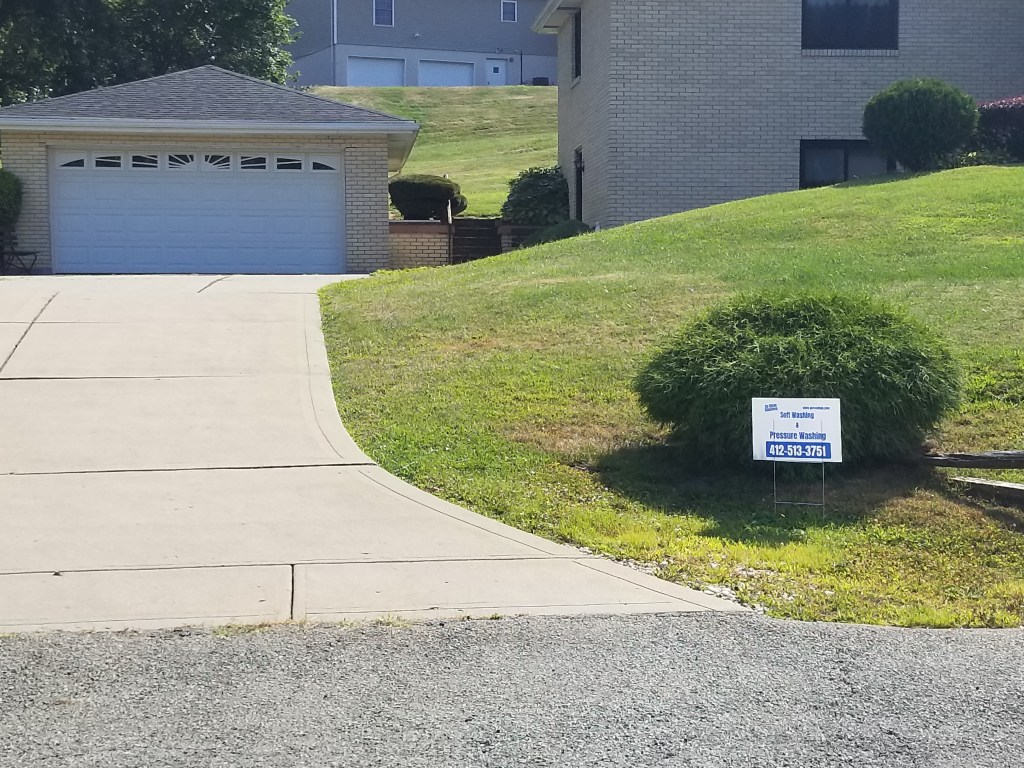
Concrete is one of the most durable surfaces on your property — but it’s also one of the most exposed.
Driveways, sidewalks, patios, pool decks, and parking areas take constant abuse from vehicle traffic, foot traffic, UV rays, oil stains, organic growth, and winter salt. Professional pressure washing can dramatically restore the appearance of concrete.
But once it’s clean, many property owners ask:
Should you seal concrete after pressure washing?
The answer depends on how the surface is used, your climate, and your long-term maintenance goals. In this guide, we’ll break down:
- When sealing concrete makes sense
- When it may not be necessary
- The different types of concrete sealers
- What each sealer is best for
- How sealing protects your investment
Why Pressure Washing Concrete Is the First Step
Before applying any concrete sealer, the surface must be properly cleaned.
Professional surface cleaning removes:
- Embedded dirt and grime
- Mold, mildew, and algae
- Oil and grease stains
- Rust and organic discoloration
- De-icing salt residue
Concrete is porous. If contaminants are left behind, sealers cannot properly bond to the surface. Cleaning opens the pores and ensures even absorption or adhesion.
Skipping this step can lead to peeling, clouding, or premature failure of the sealer.
What Happens If You Don’t Seal Concrete?
Not all concrete must be sealed — but unsealed concrete is more vulnerable.
Here’s what can happen over time:
1. Increased Staining
Oil, grease, fertilizer, and organic debris soak into porous concrete, making stains harder to remove later.
2. Freeze-Thaw Damage
In colder climates, water penetrates concrete, freezes, expands, and causes cracking or surface scaling.
3. Salt Deterioration
Road salts and de-icing chemicals accelerate surface breakdown.
4. Faster Organic Regrowth
Algae and mildew tend to return more quickly on unprotected concrete.
If your concrete sees heavy traffic or harsh weather exposure, sealing often adds long-term value.
Types of Concrete Sealers (And What They’re Best For)
Choosing the right concrete sealer is critical. Different sealers serve different purposes.
1. Penetrating Sealers (Silane or Siloxane)
Best for: Driveways, sidewalks, and exterior concrete exposed to moisture and road salt.
Penetrating sealers soak into the concrete and chemically react within the pores. They create water repellency without forming a surface film.
Benefits:
- Invisible, natural appearance
- Excellent moisture protection
- Reduces freeze-thaw cracking
- Breathable (allows vapor to escape)
- Long-lasting performance
Ideal for homeowners who want protection without changing the look of their concrete.
2. Acrylic Concrete Sealers
Best for: Patios, decorative concrete, and stamped concrete.
Acrylic sealers form a thin protective film on the surface.
Benefits:
- Enhances color
- Available in matte or glossy finishes
- More affordable upfront
- Easy to reapply
Considerations:
- Shorter lifespan (typically 1–3 years)
- May require periodic maintenance
- Can become slippery if not properly formulated
Acrylic sealers are popular when improving curb appeal is a priority.
3. Polyurethane Sealers
Best for: High-traffic residential areas or commercial properties.
Polyurethane creates a thicker, more durable film than acrylic.
Benefits:
- Strong abrasion resistance
- Superior stain protection
- Longer lifespan
Considerations:
- Higher cost
- Requires precise surface preparation
- Less breathable than penetrating sealers
These are ideal where durability is more important than maintaining a completely natural look.
4. Epoxy Coatings
Best for: Garage floors and interior concrete.
Epoxy coatings create a thick, decorative surface that resists chemicals and heavy wear.
Benefits:
- Extremely durable
- Chemical-resistant
- Decorative options available
Note: Standard epoxy coatings are not recommended for exterior surfaces unless specifically UV-stable.
When Should You Seal Concrete After Cleaning?
Sealing is typically recommended when:
✔ The concrete is in good structural condition
✔ The area experiences heavy vehicle or foot traffic
✔ The surface is exposed to road salt
✔ You want to minimize oil staining
✔ You want enhanced curb appeal
You may not need sealing if:
- The concrete is severely deteriorated
- Replacement is planned soon
- Budget priorities focus only on cleaning
A professional inspection can help determine whether sealing will provide real value for your specific surface.
How Long Does Concrete Sealer Last?
Lifespan depends on the type of sealer and usage conditions:
- Penetrating sealers: 5–10+ years
- Acrylic sealers: 1–3 years
- Polyurethane sealers: 5–10 years
- Epoxy coatings: 5–15 years (interior applications)
Proper preparation and professional application significantly impact longevity.
Cost vs. Long-Term Value
Sealing concrete adds upfront cost — but can reduce long-term maintenance expenses.
A sealed driveway or patio:
- Cleans more easily
- Resists staining
- Reduces winter damage
- Maintains appearance longer
- Extends overall lifespan
In climates with frequent freeze-thaw cycles, sealing can prevent costly repairs and surface deterioration.
Final Thoughts: Is Sealing Concrete Worth It?
Pressure washing restores the appearance of concrete.
Sealing protects it.
If your concrete is exposed to harsh weather, heavy traffic, or frequent staining, sealing after pressure washing is often a smart investment. The key is selecting the right product for the specific application.
Not all sealers are created equal — and not all surfaces need the same solution.
If you’re considering professional concrete cleaning and want guidance on whether sealing makes sense for your property, consult with an experienced exterior cleaning professional who can evaluate the condition, usage, and long-term goals for your surface.
Clean concrete looks great.
Protected concrete lasts longer.


 So Clean Solutions
Leave a comment